


From Sheldon Cooper to Tony Stark with a touch of Alan Watts





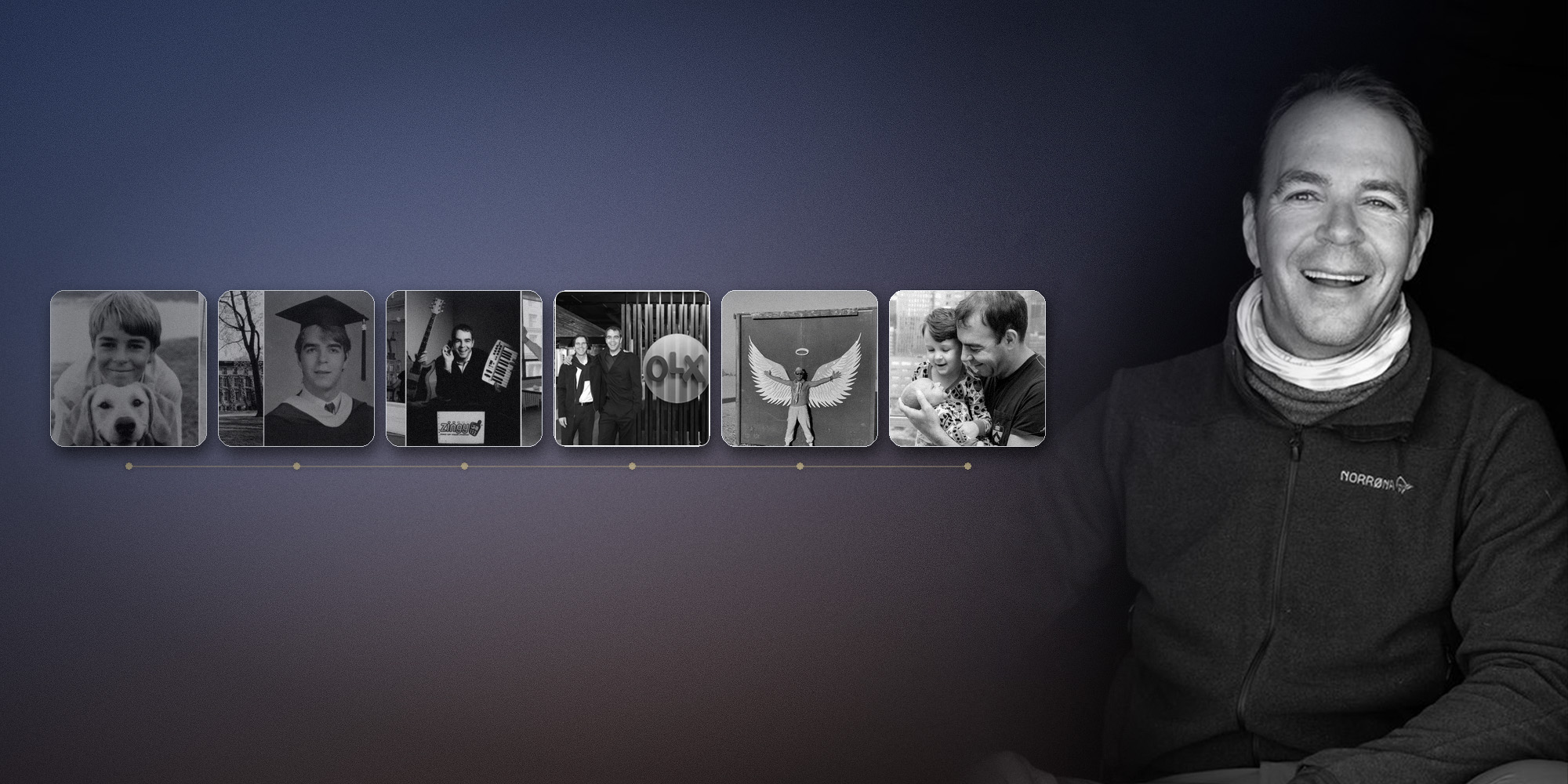
A frank conversation with Jodie Cook about ambition, failure, money, love, and the game of life
I had a wonderfully frank, intimate, and multi-faceted conversation with Jodie Cook. We covered many a topic I’d never admitted to anyone: being a virgin at 27 who thought everyone around him was an idiot; the very public bankruptcy that humbled me and turned out to be one of the best things that ever happened to me; the hundred days I spent getting rejected by strangers on purpose; giving away everything I owned and rebuilding my life from first principles; the psychedelic journeys that changed how I read the world; and why I’ve become convinced that life is a game most people don’t realize they’re playing. If you’ve only known me as an angel investor, this is the rest of the story.
Here is how Jodie presents the conversation:
Fabrice Grinda has invested in over 1,000 companies and had more than 300 exits. He also treats life like a game.
In this interview, Fabrice explains how he thinks about ambition, failure, money, relationships, decision making, and building a life that actually feels good to live.
He shares how he went from being socially awkward and deeply ambitious to building companies, losing everything, making millions, giving money away, and designing his life from first principles.
Inside the video:
- Why work feels easier when it feels like play
- How Fabrice got over the fear of rejection
- What public failure taught him about ambition
- Why he gave away his possessions and started again
- How he makes major life decisions
- Why he believes money is a tool, not the point
- How to read the signs when something is no longer working
- What he thinks people get wrong about risk, success, and happiness
This is a conversation about success from someone who has achieved it, questioned it, and rebuilt his life around what he actually wants.
Chapters:
- 08:01 — Why 100-hour weeks don’t lead to burnout
- 13:57 — Why bankruptcy became one of the best things that ever happened
- 17:38 — The 100-day rejection challenge that changed everything
- 25:36 — The decision-making framework for major life changes
- 27:28 — Giving everything away and starting from zero
- 30:01 — The spiritual framework that guides decisions
- 35:12 — Why you shouldn’t fear taking big risks
- 45:44 — The biggest mistake most people make
- 48:15 — What it was like to fail in public
- 55:25 — Living your best possible life
- 1:01:20 — Does free will actually exist?
Topics covered: angel investing, startup strategy, first-principles thinking, fear of rejection, decision making, founder burnout, building marketplaces, money mindset, risk, and living life as a game.
Transcript
Jodie Cook: What you’re about to hear comes from one of the most successful angel investors on the planet. Fabrice Grinda has invested in over 1,000 companies, with over 300 successful exits. He treats his entire life like a video game.
Most people spend their whole lives chasing success and still feel empty. Fabrice figured out why. In this interview, he shares how he went from being a virgin at 27 with zero social skills, to working 100-hour weeks that felt like play, to now living his dream life split between three countries. He talks about his unconventional approach to decision making, his radical philosophy on money and success, and the spiritual awakening that changed everything. This is an intense deep dive into how the ultra-successful actually think. If you’ve ever wondered what you’re missing, this is it.
Here is Fabrice.
Fabrice Grinda: I didn’t start with this perspective, to be completely honest. I had a sense of manifest destiny growing up. I got my first computer in 1984. I was 10, it was love at first click, and I knew computers and I were meant to be together forever.
I always had a very assured sense of myself. I had the ambition to make a ripple in the fabric of the universe. I don’t know where that ambition came from — I was five and I had it. I was going to be the smartest, the best, the most successful, no matter what, and that was all that mattered to me. In fact, I thought everyone around me, including my parents, were idiots. I’d think: you’re not smart enough to be graced by my presence, let me go study alone.
I was Sheldon Cooper. In my pre-teen years and early twenties, I was definitely Sheldon Cooper — everything was on the altar of intellect and ambition, and the two were highly related in my mind. For a while I wondered whether I should be in politics, but I realized my allegiance is to humanity, not to any single nation state, and the best way to impact humanity at large is through technology and harnessing its deflationary power. So at 10, 11, 12, 13 — this was the 80s — my role models were Bill Gates and Steve Jobs. I was winning all the Olympiads and getting the top grades in France. When I went to interview at a top French school, they asked me what I wanted to do when I grew up. I said I wanted to be a tech founder, like my role models Steve Jobs and Bill Gates. And of course they said: what? You’d betray the ideals of the French Revolution.
So it was obvious — I needed to leave France and live the American dream in the US. At 17 I left Nice, where I grew up. It’s an amazing place to grow up, but it’s a sleepy summer tourist town, and if you have a modicum of ambition you don’t belong there — you belong in Paris at least. But frankly, I needed the American dream. So I left for the US, went to Princeton, and finished with the highest GPA in my class — straight A-pluses in my major.
Because I already knew how to program and knew I wanted to be in tech, I decided to study economics and math: math because it’s beautiful, and economics because it explains the way the world works. But here’s what’s interesting. I didn’t do any of it out of obligation. At Princeton I studied everything — Russian literature, the Roman Empire, Mandarin, electrical engineering, molecular biology. I was probably the only non-pre-med in molecular biology. I did these things out of intellectual curiosity. I did them for fun.
So here’s the key thing. I was very ambitious, but none of it felt like work. It all felt like play. I was building things — I had four jobs in college and built a computer company that exported equipment to the US and Europe. It was all fun. And I think that’s the fundamental difference. If a student feels their homework is homework, they’ll cram the night before, maybe get a good grade, and forget it immediately. If you do it because you find it interesting and fun, it sticks. Princeton has more Nobel Prize winners than all of France, and these are people who get their two minutes of fame and then no one remembers them. The average academic paper is read by five or seven people. They have office hours and nobody goes. I thought: I have the greatest minds in the world at my disposal, I can just go hang out and chat about their latest research. If you take a genuine interest in people and what they’re doing, they’re more than happy to talk to you. That approach — pursuing my curiosity and passion — has always led me right. It always looked like play.
In fact, this simulation we live in always looked like a video game to me. We each have character attributes that were preset before birth, and we can tweak them through training. It’s a role-playing game: through iteration you get better, you can max out some attributes and not others depending on your preset character. Pursuing curiosity and interest has always guided me.
That said, I did some things I thought were necessary that, in hindsight, I probably wouldn’t do again. Graduating at 21 in ’96, in the early bubble days, I feared people wouldn’t take me seriously — I was shy and introverted. Even though I’d built a little company that paid for college, it wasn’t a “real” company; I had no employees. I figured if I started a company I’d fail, and if I joined one I wouldn’t be taken seriously. So I went to McKinsey for a few years, as a kind of finishing school — business school, except they pay you. In hindsight I think I shouldn’t have. I should have gone straight to Silicon Valley and built or joined a startup, even if I failed, because failing is a lesson in itself. So that’s one place I went a little astray — but not very astray.
The next possible mistake: I wanted to build a startup, but I had no brilliant idea. So I thought, why don’t I take a US idea and bring it to Europe? In ’98 that was too early. It would have been far better to go to Silicon Valley and build or join something. But it was a very interesting experience. I raised $63 million in venture money, grew it from zero to $100 million in sales, and hired 150 employees. And I made a lot of first-time-founder mistakes. First, I overworked — I overcompensated for a lack of experience with sheer hours. I was working over a hundred hours a week, seven days a week, going to bed at one and waking up at five, every single day.
But even then it was play. I didn’t deem it work; I thought it was fun. And that’s the difference between two people. Imagine two people doing exactly the same thing. One is grinding because they need to prove themselves — to their parents, to society, to a teacher, whatever chip they carry on their shoulder. At some point they burn out. The other is doing the exact same hundred hours, but loving every minute because it’s play. They can go on forever. And that person wins every time.
Jodie Cook: It probably shows physically, too. The person for whom it’s play would look healthier and happier.
Fabrice Grinda: Even though I had no life outside of it. I had no friends, no girlfriend — I didn’t even have a girlfriend until I was 27. It didn’t even occur to me to look for one. It was manifest destiny, world domination. Girls were a distraction. Fun, but a distraction. I needed to focus on what I thought was important.
Of course, when the bubble blew up and I lost everything, I realized that being high-IQ and successful might not be the be-all and end-all. When you’re younger, you’re insecure about the things you’re not good at. I was very confident in my intellect and in being a smart, successful tech guy. But I was deeply insecure socially — I had no interest in soccer or clubbing, I’d rather be into music, and I had basically zero social connections. I had no friends in college.
What’s interesting is that when that company failed, I went from hero — covers of magazines, the French Forbes, the eight o’clock news — to losing it all. And then I had a moment of reflection. I actually sent myself a very long email: what should I do now? I’d been in the right place at the right time and I’d missed my chance. One opportunity, and I didn’t take it. I thought long and hard: do I go back to McKinsey? Business school — which is a bit ridiculous, because my company was a case study there. Private equity? And then I thought: I didn’t do any of this for the money in the first place. I like building something out of nothing. I like harnessing technology to make things cheaper and better for other people. Even if tech was going to be a small, niche thing with no money in it — you know what, I’m going to stay a tech founder, because that’s what I actually care about. This is my form of play. So this is 2001: the bubble had burst, venture was dead, tech was dead. And I’ll share that email I sent myself at the time.
Jodie Cook: I’d love that. So because the bubble had burst, you literally thought: there’s no money in this, but I’m going to play in it anyway because I love it.
Fabrice Grinda: Yes. And one piece of advice: when you write yourself these emails, be thoughtful and methodical, but don’t try to reach a conclusion while you’re writing. I’ve done that email exercise multiple times. Let me send you the first one.
Jodie Cook: One question on McKinsey after college — was that a mistake because you were doing something you felt you “should” do?
Fabrice Grinda: No, the funny thing is I liked it. For the first time, I liked the people. McKinsey at the time was where the smartest people were, so I actually made friends for the first time, and I learned written and oral communication and public speaking, which were useful. The work itself was just reasonably uninteresting. I think it was a mistake mainly because I lost two years of the tech bubble I should have been part of. And those same communication skills you can learn on the job by just doing it. The first time I gave a presentation to an audience of 500 people, I was scared shitless. By the fiftieth time, easy. Put me on the other side of a camera with millions of people watching — it doesn’t faze me. I’ve done it so many times.
What resonates is being your true, authentic self. The one thing that set me apart early on: most people have a fundamental insecurity, a little devil telling them they’re not good enough, not working hard enough. I never had that. I’ve always had the opposite problem — you could do anything, nothing could stop you, whatever you put your mind to you’ll accomplish. That was always there.
So McKinsey wasn’t a huge mistake. I think there are no real mistakes. McKinsey, joining a startup, building a startup — all three would have turned out great. Going straight to Silicon Valley is probably a marginally better outcome than going to McKinsey and going to France, but whatever. The thing is, I almost sold my company for $300 million and would have made $120 million. Instead I went bankrupt. And it’s probably one of the best things that ever happened to me — because I was an arrogant, narcissistic, self-involved prick, condescending and judgmental, and I didn’t understand the value of money. I thought it was easy to make, so I didn’t value it. Failing so publicly — the first time I’d ever failed at anything — was useful for perspective.
It also taught me to stop being judgmental. Actually, what taught me that was forcing myself to go on dates. I realized people are built differently, and there isn’t just one metric of value. For me it had been all IQ and ambition — if you didn’t have those, you weren’t interesting. That’s why I didn’t relate well to my parents or to most people. Eventually I realized: we’re all built differently, we all have our own perspectives and lives, and there’s no judgment to be had. And a lot of that judgment came from insecurity, because I was so good at being smart and ambitious and so bad at being social, having friends, having hobbies. Once I dropped the insecurity and started accepting people for who they are, my relationships — with others, and especially with my parents and family — improved dramatically. So I went from a condescending, arrogant prick to someone who accepts that everyone is built differently and has their own merits. But that transition took years. It probably started at 25 or 26, after the public failure, and continued into my early thirties, as I started dating and realizing there’s more to life than IQ.
Jodie Cook: Imagine that. If you had to pinpoint one year when Fabrice 2.0 was created, when would it be?
Fabrice Grinda: It was a gradual path. Going to McKinsey at 21, in 1996, and realizing there are a lot of other smart, interesting people out there — I just hadn’t known where to find them. So I started interacting and having friends for the first time. Then I started my startup in 1999–2000 and realized: I thought I was a shy introvert, but being eloquent and passionate actually comes naturally to me. My perceived introversion was driven by being in settings without my peers, where I couldn’t express my passion. Put me on stage and — oh my God, this comes naturally. So when the startup failed in 2001, I thought: I’m a confident, extroverted, curious person intellectually and in business, and yet I’m shy and introverted in my personal life. Maybe that’s just an artifact of never having had friends, never having been in the right social situations, never having dated. Why don’t I get a girlfriend?
Obviously, if you’ve never even asked a girl on a date in your life, the concept of a girlfriend is hard. So for a hundred days, I forced myself to ask girls out in the streets of New York — ten girls a day, for a hundred days, so a thousand girls. The point wasn’t to get a date; the point was to get over the fear of rejection. The benefit was that I’d asked so many VCs for money and been told no that, in a way, you get used to rejection.
Jodie Cook: How did that go? The first time must have been terrifying.
Fabrice Grinda: The first time I literally ran away in the other direction, because it’s awkward — you’re asking a random beautiful stranger out in the street. But thanks to the law of large numbers, it went pretty well. I got 45 dates, roughly one every other night. The problem was, I’d never been on a date in my life, and my expectation of a date and the reality were very different. I thought a date was a meeting of the minds — two people debating Locke versus Hobbes, Rousseau versus Voltaire. It turns out the random beautiful stranger you pick up on a New York street is a model-slash-actress — really a bartender and aspiring model — interested in fashion and the latest pop news, with no interest in any of the things I wanted to talk about, and vice versa. Our worlds didn’t overlap at all. I had no money, so I quickly figured out it should be drinks, not dinner. And I quickly realized this wasn’t going to work. One of the women was so attractive that on the second date she asked me to come over, and I said no — I’d never had a girlfriend, and someone I had zero intellectual chemistry with was not going to be my first. But it was still useful, because I got over the fear of rejection. After that I went looking for the right women instead of the random beautiful stranger, and ultimately found love several times.
So, the next startup. It’s interesting because it was a means to an end — and I didn’t grind through it. I didn’t like the product I was building, the products I was selling, the category I was in, or the partners I was working with. I didn’t like anything about it.
Jodie Cook: But it was lucrative?
Fabrice Grinda: I was selling ringtones. I brought ringtones to the US. Here’s the thing: in a world with no constraints, go build what you want, follow your passion. But in 2001 there were real constraints — there was no capital available. My passion was to be a tech founder, in the US, ideally in New York, because I was madly in love with a girl (it didn’t work out). So I needed to be in New York, in the US, building a tech company. But there was no VC money; tech was dead; it was going to be a small, niche business. So instead of building the kind of thing I’d want to build, I built something I thought I could make profitable with very limited capital. That’s why I built a ringtone business — even though I’d never really listened to music, and I thought the music companies were idiots. They were. They kept saying no to my advances even though I was trying to make them money, and I ended up making them hundreds of millions. The phone companies didn’t understand the opportunity either.
So I didn’t like the products I was selling, and I didn’t think providing street cred to teenagers added much to society. But I genuinely liked the process — building the company, hiring the team, scaling it, doing the deals — even though I didn’t like the category. You also have to be aware of the constraints you live in. I had no VC money, so I built that company the old-fashioned way: on profits. We almost died many times. We missed payroll 27 times, including four months in a row. It took two and a half years to land the first operator deal. But once it landed, they loved us, and revenues went from $1 million to $5 million to $200 million, profitably. Then I sold it — too early, but better too early than too late, and for cash, because the last company’s stock had fallen 99.98%. At 29, I made about $43 million. The means to an end had paid off, and now I had the capital to build what I really wanted.
That’s when I went back to building marketplaces and built OLX. OLX is Craigslist for the rest of the world, except mobile-first and female-friendly — because women are the primary decision maker in every household. Women decide which house you live in, which babysitter you hire, which car and couch you buy. Craigslist was the least female-friendly site imaginable, full of scams, prostitution, and junk. I thought: in emerging markets like India, Pakistan, and Brazil, there are no payment systems, no trust, no shipping. Can I build a site that becomes part of the fabric of society and makes the world a better place there? It took a long time, but it worked — this time VC-backed, building something I truly cared about. I grew it to 350 million users a month. About 5% of the world’s population uses it every month; tens of millions of people make a living off it. In those countries we’re part of the fabric of society. Every day we’d get thousands of letters from users telling us what a difference we’d made. So my ambition was finally aligned with my values.
Jodie Cook: At five years old you had an ambition for a ripple effect. With OLX — being part of the fabric of society, getting all those messages — were you aware at the time that this was what you were here to do?
Fabrice Grinda: Oh, yes. That’s why I started it. I studied economics because it explains how the world works, and I love markets because they bring efficiency to things that are opaque and fragmented. By making things cheaper, they make things better and improve people’s purchasing power. So I knew from the start I wanted to build marketplaces. To me the power of the internet is cheaper, better, faster, and I wanted to bring that to hundreds of millions — if not billions — of people. I knew OLX was the company I was meant to build. It took a while, but I loved it. Aligned values, aligned mission.
But funnily enough, once I’d succeeded, the same thing happened again — I felt I was no longer living my life’s mission. Picture 2012: I’ve won the war. Huge company, 11,000 employees, 30 countries, letters from users every day, a top site in every one of those countries — massive external validation. But I wasn’t happy anymore, because the job had changed. In the early days I was writing user stories and product specs, feeling a direct impact on the outcome. Once you’re 11,000 employees and part of a publicly traded company, your job becomes building quarterly budgets and making sure you hit the numbers. And I wasn’t happy day-to-day. So I went back to first principles. What if — the unthinkable — I quit the company I started, the one where I’m getting all the pay and recognition, because it’s no longer true to what I want to be doing? And I knew it was time, because I wasn’t loving the day-to-day. To me, loving the day-to-day is what matters. So I wrote myself another long email, laying out all the crazy things I could be doing instead. I wrote it in the summer of 2012, while I was still CEO of OLX.
Jodie Cook: When you write these, are you writing to your current self?
Fabrice Grinda: Yes, to my current self. I lay out where I am in life, what I’m happy with, what I’m not, what could be better, and what the options are, with no limitations. I went broad — run for office in Cuba, become a public intellectual, whatever. Then, instead of imagining the ideal day for each option — the day you succeed and get celebrated — I imagine the average day. What does it actually look like, and what are the pros and cons? What would I like? What wouldn’t I like? Then I send the email to people who know me — friends, advisors — and ask two questions: knowing what you know of me, what do you think I should do? And, if it were you, what would you do? Those are different perspectives. Most people, if they were CEO of a hugely successful company with amazing pay and recognition, would stay. My conclusion was: absolutely not. You start from scratch.
In fact, I went to full first principles. I decided I didn’t like that life has a default mode — you have an apartment, so you go there; a city, so you live there; a group of friends, so you see them. What if I gave everything away to charity and started from nothing? Complete first principles. If I had infinite time and nothing to do, where would I want to be today? What would I want to be doing? Who would I want to see?
So that’s the exercise I went through after deciding to leave OLX. I went to first principles, and then I iterated — I didn’t know what the answer would be. I tried couch-surfing on friends’ couches, which was a total disaster. My vision was that we’d have infinite time to remake the world, talk like we were in college, play tennis. But I was single with infinite energy and time, and they were married with kids. I wasn’t a value-add; I was a distraction. So that didn’t work.
Jodie Cook: And you have to sleep on a couch, too.
Fabrice Grinda: Exactly. So I tried many things. I Airbnb’d for years. I worked from hotels. I tried staying in a place for one week then moving every week, but that was tiring. I tried two months, but that was too long. I iterated and iterated until I got to where I am today. People don’t throw enough spaghetti at the wall. Two things matter: you have to throw the spaghetti, and then you have to read the tea leaves. For seven years I tried to build a big compound in the Dominican Republic, and for seven years the universe kept saying no, no, no. I even wrote a blog post about the universe kicking me in the teeth — actually it’s called “The universe is whispering to you.” For a long time I refused to take no for an answer.
Jodie Cook: And that was recent?
Fabrice Grinda: Yes, recent. I explained why I’d chosen the Dominican Republic and everything that went wrong, again and again. But I learned to read the signs. I’ve gotten much better at it since I took my spiritual path in earnest, which happened fairly randomly — I did three deep psychedelic journeys: one on ayahuasca, one on psilocybin, and a couple on LSD. Since then I’ve become much better at reading the signs than before, when I was ignoring them.
I’ve always thought life is a game. I even wrote a long blog post on the meaning of life — the meaning of life is life itself: to play the game and to be your true, authentic self. Most people don’t realize that. They think things are serious when it’s all a game, all play. But here’s where a lot of people in spirituality fail, and why a lot of them never make money: letting things flow is very different from sitting on the couch waiting for things to happen. Going with the flow of the river isn’t doing nothing. It’s doing things, then watching the response you get from the universe to see whether you’re aligned. You still have to be active. The monks who think they need to meditate all day are, I think, missing the point of the simulation. You’re meant to be a participant, not to transcend or disengage. Zen would call that clinging to emptiness; Watts would say they missed the punchline. The moment you reject the game, you’re back in the illusion — you think there’s a purer state somewhere else, but there isn’t. This is the game. The game is playing this life. That’s why you should have fun with it. It’s why my whole life I’ve done things that make me happy even when they make no sense to others — leaving a company at the top, giving all my possessions to charity, starting a tech startup in 2001 when tech was “dead” and everyone told me to go to business school or private equity.
Do the things that resonate. I lead a very nontraditional life — distributed across three and a half geographies, with a nontraditional relationship — but it’s true to me. You shouldn’t live your life worried about the judgment of others, or do things because you think you “should.” Do what’s right for you and what truly resonates.
It applies to startups too. You build, you try things — you have to try a lot of things, throw the spaghetti — and then you read the signs. In a startup, the worst thing is to fail slowly; you want to fail fast. Try hard, and if it doesn’t work, move on. If your metrics are 10x away from where they need to be, you’re probably not going to get there. If they’re 50% away, then with enough iteration you probably will. Grit and tenacity matter — if you don’t try hard, it means nothing — but you also have to read the signs. You try hard, and then you learn whether it’s going to work based on the data and the signals you’re getting.
Jodie Cook: I once heard the phrase, “the universe rewards big risk-takers.” Which I guess is like throwing big spaghetti at the wall.
Fabrice Grinda: It’s just as much work to build a small startup as a big one. It’s just as much work to open a restaurant as to build a billion-dollar company. So you might as well build the big one. Go big or go home. But again, it has to be a reflection of you — there’s no judgment in it. Some people are very happy running a mom-and-pop shop or a restaurant; maybe you want the local connection to your community and love chatting with your customers. Optimize for what’s right for you.
And I don’t actually think the universe rewards big risk-takers more than small ones. I think it rewards people who do what’s right for them — what’s in line with their energy, passion, vision, and joy. The universe rewards play and joy. Be joyful and playful in everything you do. That play is rewarding in and of itself, and I think you’ll be rewarded for it. When people force things, it’s hard to make it sustainable.
Jodie Cook: Have you always applied this to the people in your life, too? Read the signs, play the game, follow joy — do you apply that to who you spend time with?
Fabrice Grinda: Yes. First of all, I don’t think there’s much real risk in life for people like me. My first startup went bankrupt — so what? I could find a job at McKinsey or Goldman in a minute. I could make a ton of money if I wanted to; all my friends are successful and could hire me; I could live on my parents’ couch. There’s no real risk. What’s the downside — I live with my parents for a couple of years? It’s not the end of the world. People have an overblown sense of the risk they’re taking. I’ve been bankrupt — so what? It’s not that hard to make enough to eat, and people can help you. Okay, maybe you’re not dining somewhere fancy, but an all-you-can-eat buffet for five bucks exists. People overestimate how much risk there really is. If you’re confident in your abilities and your intellect, there is no risk.
Second, yes, the people you surround yourself with matter. I try to surround myself with people who have a similar mentality. I’ve noticed that people who constantly complain that horrible things happen to them tend to put themselves in situations where horrible things happen — it’s confirmation bias for their belief that the universe is out to get them. I believe the universe is out to reward me, so it does. So I surround myself with happy-go-lucky people who believe the same: that life is a game, you’re here to have fun, you work hard but don’t take it all too seriously.
Jodie Cook: When you had 11,000 employees and all that external validation but realized you weren’t happy — how did you turn that feeling into the next plan? How big a part was the email you wrote to yourself?
Fabrice Grinda: This was pre-meditation, pre-spiritual-awakening for me — that started on May 30th, 2015. When you have the sensation that you’re bored or unhappy, you think about it and talk to people about it, but thinking about it is loose and unstructured. What I love about writing is that it structures your thoughts. When you put pen to paper, you have to articulate what you’re really comfortable and uncomfortable with — the actual pros and cons. I’d been noodling on it for months, and the writing was the clarification of that process. Taking the time to write it down structured my thinking far more rigorously, and that became the basis for the conclusion that I should leave.
Jodie Cook: It’s interesting that you’re an ENTJ. I’m an ENTJ; my husband’s an INTJ. I’ve spent my whole life around NTJs — I almost thought about starting a podcast called “NTJ Radio.” And we all think we’re the best.
Fabrice Grinda: Though I’m on the border — I love public speaking, but I’m also perfectly happy alone with a book. Small talk drains all my energy; I hate it. I’m happy to go to Burning Man with a girlfriend and enjoy the place, but not to make small talk with strangers.
Jodie Cook: The N makes sense — intuitive, visionary, in tune with spirituality. But the T and J can feel at odds with that, because we want to plan things and put logic around everything. Did you ever feel that push and pull, pre-May 30th, 2015?
Fabrice Grinda: First, I haven’t retaken the test, so maybe it’s changed.
Jodie Cook: Right.
Fabrice Grinda: You might be more of an F than you think.
Jodie Cook: Maybe, yeah — that would be interesting. The ENTJ type is the commander: control everything, seek control, cling to control. So how does that —
Fabrice Grinda: I see it differently. You put things in motion, but you don’t get attached to the outcome. You do the work and then watch how it plays out, and adjust accordingly. I’ve never been a control freak, even before.
Jodie Cook: And the “you can do it” attitude — some people have an internal monologue saying “no, you can’t, it’ll never work.” You’ve never had that. There’s a school of thought that says your internal monologue comes from your parents telling you what you can and can’t do. Where did yours come from?
Fabrice Grinda: I don’t know — maybe it was the opposite. Maybe it came from observing my parents and thinking, these people are incompetent, I’ll do it myself.
Jodie Cook: Did you tell them that?
Fabrice Grinda: Oh, yes. When I was 10 I was insufferable. I’d tell my parents at the dinner table that they should be grateful to have my intellectual presence there. I was an insufferable, arrogant kid — Sheldon Cooper. I told them I didn’t understand where my intellect came from, but it clearly didn’t come from them. And yet, funnily enough, I was probably the best kid you could have: skipped grades, straight A-pluses, never got in trouble, never drank, never went out. Literally the best in every respect — but also very cold and judgmental, not very lovey-dovey.
Jodie Cook: And do you laugh about it with them now?
Fabrice Grinda: Oh, absolutely. My mother makes fun of me. We definitely laugh about it now. But yes, I was very different then.
Jodie Cook: How’s Angel doing?
Fabrice Grinda: She has an eye infection, so she needs a cone and I have to put drops in her eyes morning and evening, but she’s doing great. We have an amazing relationship now, because — you know what? They’re not as smart, and that’s okay. They’re not as ambitious, and that’s okay. They’re their own people, with their own pros and cons and the things they love. I used to be judgmental; now I’m not. Now I accept people as they are. I used to want to change people, or judge them by a certain framework of value. Now I see everyone as invaluable exactly as they are. In fact — thank you for being you, because it allows me to be me. I couldn’t have the life I love today if it weren’t for all the other people living their lives and allowing me to live mine. That’s the real difference: judgment has completely disappeared. I don’t think there’s any single wrong way to live your life. You do what’s right for you, and that’s okay. And maybe you’re doing things that aren’t right for you — but maybe that’s the experience you need in order to learn that lesson. People can give you advice, but it’s up to you whether you take it. It’s your journey, and you shouldn’t be judgmental of other people’s journeys; you don’t know what they’re going through. That’s probably the single biggest difference between back then and now.
Jodie Cook: Funny — I was just writing the word “advice” as you said it. So with this full acceptance of other people, what do you do when someone specifically asks you for advice?
Fabrice Grinda: I tell them what I’d want to hear myself: if I were you, here’s what I’d do; if I were me in your situation, here’s what I’d do; and here’s the process I’d follow. Now it’s up to you to decide whether it resonates and whether to act on it. So I still give advice, especially when asked — but I’m not attached to the outcome. It’s their choice to take it or not.
For instance, part of how I give to charity is that occasionally, when I have a big exit, I just give money to friends — because many of them have made choices that are good for humanity but not great for them. Someone who ran a dermatology clinic decided to go into cancer research and cut their salary by five. Better for the world, maybe — but not great for them. So I’ll occasionally give people like that $100,000 or $200,000, and here’s how I do it: it’s not recurring, and there are no strings attached. You can blow it in Vegas, go on vacation, put a down payment on a house — it doesn’t matter. Give willingly and freely, with no expectations. Do it because it’s the right thing to do, because you love them. That’s true of everything, including advice. I don’t have expectations on the other end. You do things because they’re the right thing to do.
Jodie Cook: Is there anything I should have asked you? Anything you really wanted to talk about that we didn’t cover?
Fabrice Grinda: What I think people are bad at — and this is the subject of a recent blog post — is being themselves. Too many people have a combination of FOMO and doing things because they think they should, because they think someone like them is supposed to want those things, or because their parents or society want it. Very few people are truly themselves, doing what they really want and being their authentic self, instead of worrying about what others think. That’s probably the biggest mistake younger people make — worrying about what other people think, when no one is really thinking about them at all, and doing things because they “should” rather than because they want to. Don’t do things for the résumé or the pedigree. Do them because you really want to. When you do, in my observation, very good things happen.
Jodie Cook: Pre-27, before you’d ever dated, geeking out and thinking everyone else was an idiot — did you have any sense of obligation, or worry about what people thought? Or have you always just not thought about it?
Fabrice Grinda: I never cared, because I judged them for not being smart enough. They could judge me for being a virgin at 27, but I could judge them for being unworthy. So no — I never cared.
Jodie Cook: Have you ever written an “advice to my former self”?
Fabrice Grinda: The funny thing is, when I ask myself whether I have any regrets, the answer is probably no — because I love where my life is today, and I wouldn’t change anything. If I changed anything, I probably wouldn’t be where I am. Including the very public failure at 25 or 26, including being a virgin until 27, including being an arrogant, condescending kid. If you “fixed” all those things, I worry the outcome would actually be worse. It would definitely be different, and I can imagine many scenarios where it’s worse than where I am. I genuinely think I’m now leading the best life that’s ever been lived.
Jodie Cook: When you say the public failure — can you give a snapshot of how public it was?
Fabrice Grinda: I was on the eight o’clock news every night and on the cover of every magazine. So when the company went bankrupt — and I had a falling out with one of the richest men in the world at the time — it was very high-profile. I’d signed an NDA, so I couldn’t talk about any of what had happened. My image was being destroyed and I couldn’t even defend myself.
Jodie Cook: What did you do while those headlines were running?
Fabrice Grinda: Funnily enough, I didn’t particularly care. I thought: I’m amazing, people are entitled to their opinions, and I’m just going to go build my next startup — even if it’s small and there’s no money in it.
Jodie Cook: I wonder if you just had a sense that it would be a blip — a story you’d tell in the future.
Fabrice Grinda: I definitely did not know that. At the time I thought I’d lost the biggest thing — that I’d been in the right place at the right time with the right skills, and I’d let it slip through my fingers. It’s the same feeling I’ve had every time I’ve fallen in love and it hasn’t worked out — including recently. In the moment it feels like the soul-crushing, be-all and end-all. But it’s interesting: now, when these things happen, I do think there may be something to the idea of one infinite present. On the second date with one woman, after she left I sent her a voice note saying, “This is amazing, I love you” — and then thought, what the hell, I just told her I love you on the second date. So I deleted it and didn’t tell her for the next five months, because I was embarrassed. But somehow I knew she was going to be one of the great loves of my life. And in the final months, before our recent breakup, I felt dread — even though I’d never been as in love, and everything felt the most perfect it had ever been. Somehow I felt it coming. I think you sometimes have a premonition of these things.
It’s funny — only this year have I really been writing on these topics of spirituality. I wrote something I didn’t publish, because it would beg the question of why I’m suddenly writing about falling in love and who we should fall in love with. But, believe it or not, Dan Brown — the author of The Da Vinci Code — just released a new book, The Secret of Secrets, and it’s about consciousness and non-dual existence. It really resonated; I’m reading it now. He actually wrote a good book for once. These non-dual themes have definitely been on my mind for the last six to nine months.
Jodie Cook: Have you read The Game of Life and How to Play It?
Fabrice Grinda: No, but I suspect I could have written it.
Jodie Cook: It’s a very old book — the second edition is from 1941, maybe earlier, possibly the 1920s. Florence Scovel Shinn. It’s all those classic ideas. I have so much highlighted from it. Are there other books you’d recommend? If you took a very logical, skeptical person and said, “read one book that will change your life,” which would it be?
Fabrice Grinda: Honestly, read my blog post on the meaning of life. It’s almost a book in itself — about an hour-long read. The reason it’s worth it for a skeptical, rational person is that I go from first principles: this is what I experienced as a rational, scientific-minded individual, and this is how I explain it. It works well for skeptical intellects as an argument for why the world is the way it is, versus a lot of spiritual mumbo-jumbo that doesn’t resonate with normal people. It’s nice to say “the universe is one” and “Maya is illusion,” but it doesn’t speak to people. What I describe is actual, first-person, real experience — and then I generalize from there.
Jodie Cook: Have you turned that blog post into a book?
Fabrice Grinda: That one, maybe. The blog as a whole is harder. I’ve thought about it for a long time. First, I wanted to wait until my kids were older, so I could say I’m a successful parent in addition to having a successful life. The other issue: the most popular nonfiction books have one central idea repeated fifty times. My blog should arguably be more successful than it is, and it certainly would be if it had one central theme — all spirituality, or all marketplaces, or all fundraising. The fact that I write about love, decision making, and non-dual existence makes it hard to find an audience, because deeply intellectual and curious people are few and far between; most people are more narrow. So the breadth of topics I cover makes it hard to build a book around a single unified theme.
Jodie Cook: But aren’t you the unified theme? Even if your hundred closest friends read it first, if they all love it and tell more people — I think you are the theme.
Fabrice Grinda: Yeah. It could be “the game of life.” The book I wanted to write is called Life: How to Live the Best Life Possible. I’ve been thinking about it — but I wanted to wait until I’d also been proven a successful parent.
Jodie Cook: How do you define that? And how old do they need to be to prove it?
Fabrice Grinda: Happy, well-adjusted kids who are thriving in the world, being their authentic selves — not depressed, not addicted. You’d probably know reasonably early, but to be sure, maybe 25 or 30. Right now they’re four, two, and negative-nine-months. I’m implanting an embryo with the surrogate next week — the third one. My son asked for it: a year ago, when he was three, he said he wanted a brother. And this is the same son who put his penis in a Seabob and cut it — not permanently; kids do a lot of stupid things. But I took it as the universe talking to me through him. So I had a conversation with him: do you understand that a brother doesn’t come out fully formed, that he’ll need the milkies, that he’ll be small and need to learn to talk and walk? And he said, “Yeah, but eventually he’s going to be great. I want a brother.” So I thought: okay, the universe is telling me to make him a brother.
I have frozen embryos from an egg donor — I got the donor when I decided to have kids, which was after an ayahuasca ceremony. Speaking of reading the tea leaves: in that ceremony, everyone around me was having a horrible time — throwing up, crying, screaming. The message I got was that I’m living my best life, my life’s purpose. My journey was the opposite of everyone else’s — singing, dancing, love, joy. I drank four cups, and everyone around me was in agony, while I was thinking, this is the best thing ever, I could do this all day.
But my grandmother — who had passed more than 20 years earlier — told me something. She said I’d been resistant to having kids because I thought I was leading a perfect life and that kids would impede my quality of life. And that belief was based on observational data: my friends with kids disappeared from my life, were always tired, and complained about their kids whenever I saw them. But she said: you’re wrong. You lead a nontraditional life, so you can be a nontraditional parent. What people in New York do incorrectly is become helicopter parents — they substitute their kids for their own lives, they’re no longer a couple or individuals, they become only “the parents.” Don’t do that. Keep living your life and take your kids with you; they’ll have fun. So I’ve taken my three-and-four-year-old heli-skiing, kitesurfing, rock climbing, paragliding — I put him in a pack and we go camping. You name it. She was right that the cost is lower — not financially, but in quality of life — than I’d expected. And she said the benefits are greater than I thought. Every parent tells you “it’s the best thing ever,” but that’s generic. What mattered was why she thought it would specifically be great for me: you love teaching — you’ve taught at Harvard and Stanford — and you’ll love teaching someone you recognize yourself in. And you’re a big kid. You love playing — you play video games, you race remote-control cars and planes. This will give you an even bigger excuse to build Legos and train sets. You’ll be the biggest kid ever, and you’ll love it.
In the ceremony, I was also visited by a white German shepherd who said: you’re an epic being of light, a beacon in a universe of darkness — you need an epic white dog. You think Ghost from Game of Thrones is fictional, but it’s based on a real dog, a white German shepherd. Come find me. So I loved that ceremony: I’m leading my best life, plus kids and a white German shepherd, and a boy and a girl, because the relationship is different with each. And the other message from that ceremony was: if you keep trying and it’s not working, move on. That lesson came in 2018 — that’s when I left the Dominican Republic. After that ceremony it became clear: follow the signs the universe is giving you. So it’s only been seven or eight years that I’ve gotten better at reading the signs rather than forcing things.
Jodie Cook: Are you into astrology?
Fabrice Grinda: Not really. Could there be something to it? Maybe. But I’m more of a “let’s drop acid, tune in, and figure things out” person — a couple of times a year, light doses. The deep ceremonies, as I said, three times so far. I’ll see when the next one calls.
Jodie Cook: So do you ultimately believe things are preordained?
Fabrice Grinda: I think there may be determinism at the universal level, but I do think we have individual, local free will — and not just the illusion of it. I really think we have actual local free will, even though it doesn’t matter at a galactic scale. We have predispositions, and it’s up to us whether to follow them. So the universe looks deterministic, but I think we still have individual free will — and regardless, it doesn’t change the outcome of the universe.
Jodie Cook: I think about it like that too. Everyone gets this consciousness and can do what they want with it — it’s up to you to play the game at different levels. You could play at the highest level and achieve everything you’re capable of with all your given cards. Or you could take the exact same ingredients and do something else with them that wastes them — though you might not feel they’re wasted, because you just have a different level of ambition.
Fabrice Grinda: Yeah — it’s Alan Watts’s dream of life. If every night you could dream a life of 80 years, at first you’d dream lives of infinite pleasure and control. But after a few nights, once you’d fulfilled all your fantasies, you’d say: maybe I want to do something where I don’t control the outcome — let’s see what happens. You’d have a few of those, and they’d be scary and exciting and different. And as the nights went on, you’d dream further and wilder things — including suffering, war, disease — because the point is to experience. Eventually you’d get to the point where you’re living exactly the life you’re leading today. And I really believe that’s true.
My perspective is that reality experiences itself. We are the universe; we are the consciousness of the universe experiencing itself. We are all God, basically — but we forgot our divinity, because ultimately we’re one. And the reason we intentionally forget our divinity is so that we can have all these experiences. If you’re an immortal, omnipotent, omniscient deity, you’re bored. This simulation is a way of having novel experiences for an otherwise bored, immortal deity. Because we’re all godly, this is why manifesting works — we have these superpowers, we’ve just forgotten them. And it’s not just me: we are all gods. You are a god. That is where my interpretation diverges from traditional Christianity. They think there’s one God, Jesus Christ. I think he’s one, but we’re all gods. There’s a universal consciousness, and we each filter a subset of it down to the individual you are. So you’re Jodie, I’m Fabrice — but it’s an infinite speciation of the same universal consciousness. At the end of the day, we’re all one. I can see it when I’m on acid: I look at the atoms of the table and see them moving, because there’s mostly space between them. All of this makes so much sense to me.
Jodie Cook: Do you use your phone much?
Fabrice Grinda: First of all, I’m on permanent do-not-disturb — no rings, no vibrations. You want to be in the present. Imagine if, while we were having this conversation, notifications kept showing up; even a vibration takes your attention away from the present. Do I think a phone is useful for communication? Absolutely — I use WhatsApp all the time to chat with friends and family, and I like watching funny YouTube videos. But I’m not doom-scrolling. I’m much more a content creator than a content consumer — I’m writing blog posts, posting on Instagram, Facebook, and YouTube. I don’t look at TikTok, Instagram, or Facebook much, and I don’t follow any news. I think news and politics are a trap — an outrage-fabrication machine designed to capture your attention, but ultimately irrelevant.
Jodie Cook: That was Fabrice Grinda — angel investor and entrepreneur, who’s proven that treating life as a game works. You can follow him online to see what he does next. What’s the one thing from this interview you’re going to try?