


Fireside with a VC with Andrew Romans




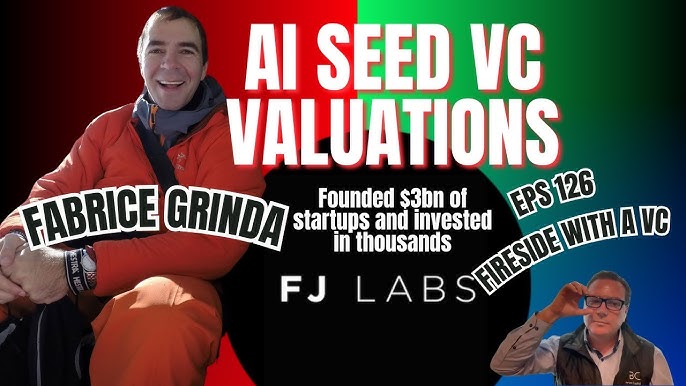
I had a great chat with Andrew Romans about the state of VC.
We discuss:
- Valuations of AI Seed to Series A startups
- All things market places, take rates, valuations, exits
- Secondaries, how to sell, when and how much
- Take rates and how to layer revenue on a marketplace
- Why the seed VC market outperforms the growth market
In addition to the above YouTube video, you can also listen to the podcast on Spotify.
Transcript
Fabrice Grinda: So it for us, selling at IPO or after the lockup expires is would’ve been the best decision every single time, basically. Also, we didn’t happen to be in the companies that were like these infinite compounders once they were public. When the opportunity came to sell a company that was very overvalued doing it was almost every time the right choice, right?
There’s almost never a moment where I regretted selling 50% even when the company kept doing well. On a go forward basis. So take the liquidity when it when you can, when you’re an early stage investor. Because DPI is valued by your LPs, it helps them to reinvest in the fund. And because we’re compounding at 30% IRR, it’s faster than the about public markets are compounding.
So you’re better off reinvesting.
Andrew Romans: Hello and welcome to Fireside with VC. My name is Andrew Romans, and today we are with Fabrice Grinda, a famous entrepreneur turned VC with FJ Laps. Fabrice, nice to see you.
Fabrice Grinda: Thank you for having me.
Andrew Romans: Yeah. Last time I saw you, you were presenting at our global VC demo Day in New York, which was great. It’s been a few years since we’ve met in person.
So Fabrice you guys are doing FJ Labs, is doing what I think you call angel investing at scale, and you had two very successful companies. Unless I’m missing a whole string of others. Maybe mention quickly what those were, and then we’ll transition into what you’re doing now and what you’re learning.
Fabrice Grinda: I built actually more than two venture backed businesses, but the two successful ones were Zingy, which was a big mobile content company in the us. It was the back of the early two thousands. It was a ringtone business. It grew from zero to 200 million in revenues in four years with no VC funding actually, because there was no VC funding available, in ’01 or ’02, and built the old fashioned way on profits.
And I sold that. And for 80 million in 2004 before we fully scaled and did very well. And then in 2006, I ended up building a company called OLX, which to this day is the largest classified site in the world. A company with 11,000 employees in 30 countries, over 300 million units a month. And it’s the leading classified site in Brazil, all Latam and Ukraine, Poland, Romania, all the eastern Europe in the Middle East, and India and Pakistan and all Southeast Asia.
It’s a huge company. Which I sold to NASCAR’s process in 2013. And in 2013 went on to build FJ Labs.
Andrew Romans: What’s interesting about that, and what I think is relevant too for founders that wanna work with you guys or VCs is that, you look at Craigslist and you think, what idiot made this interface could they make this any clunkier?
Like they’re doing it on purpose. And then of course they didn’t execute across Southeast Asia, Latam, and. Middle East and all Europe like you did. So I think that the execution, just soldier combat experience that you have, translates into building your venture firm and working with startups.
But, so to move to, to not dwell too much in the past and move into today, I believe you started investing as an angel investor yourself. While you were running companies and then you got to like over a hundred investments and then at one point, and there’s a debate of am I more effective investing only my own balance sheet or is it better to deal with all this reporting and outside LPs?
And every time I write a report to the LPs, I think to myself, maybe I’m a little sharper when I’m investing other people’s money. ’cause it forces you to like follow up on every single company, blah, blah, blah and all that. But how many I think you got like Telenor came in for 50 million, right?
Wasn’t that the first outside LP?
Fabrice Grinda: Yeah, so look I started Angel investing in 98 when I built my first company. And in fact I thought long and hard should I do this right? Like it’s a, in a way, maybe a violation for my mandate as founder, CEO, to be angel investing. It’s a distraction, but I argue to myself at least articulated that if I can articulate lessons learned to other founders, it makes me a better founder.
And if I can keep my fingers on the pulse of the market, makes me a better founder. And so I decided back in 98, as long as it takes, no more than one hour. So I came up with the fourth selection criteria, which we still used to this a and at one hour meeting I decided if I invest or not and I only do marketplaces, which of course is what I was building back in the day.
Then it’s okay and that took on life of its own. So by 2013 I was like, I think at 173 investments and doing very well already pooled my angel, investing with my current co-founder at FJ Lab, Jose, and it was going very well. Think it was going to build a venture funds for two reasons, I would say.
One is the volume of deals we kept getting in, kept increasing because of the brand I build in the marketplaces and I was like, you know what? I’m spending so much money hiring a team and to filter the inbound deals. We get 300 inbound deals per week and I’m also spending a fair amount of money like in legal, in the back office, et cetera, actually having more scale in order to pay for the cost structure ’cause the volume at which we were operating, it felt like a fund to begin with. And then all of a sudden, Telenor to your point, came and said, Hey, we wanna work with you guys because we now own all these marketplaces and classified assets, and we want a perspective of what’s going to happen and what we should do, and thought long and hard about how to best do this.
They offered to invest in the holding company. But I’m like, you know what? The more scalable way is just build a venture fund because then it doesn’t dilute us, whether it’s 50 million or a hundred million or 300 million.
Andrew Romans: And I think I knew you during this time, Fabrice and back then before there were podcasts, there were blogs.
And I remember, you were a big blogger and so was I, and I always enjoyed reading your, lengthy blogs that you would write. But I got the impression, and I don’t know if we ever talked about this, that one of the motivations to take outside capital was that you certainly see this with your friends, that you’re just regular angel investing without your scale with all your exits.
And focus is that it takes a long time to get paid. Like it takes a long time to realize the cash, which is, a whole industry, a whole, core to everyone’s strategy. How are you getting into secondaries or how are forcing liquidity, but. A lot of angels, they deploy a certain amount of cash and then they’re surprised to see, damn, I’ve been in this deal for 14 years, or 12 years, or finally at IPO’d and there’s a lockup, or it finally got acquired, but damn it, that company’s privately held with an acquired us with an inflated valuation is now I’m facing a discount if I want to get out.
So rather than get discounted there, maybe. Was that ever an issue that just the sheer timing or were you recycling cash to be able to continue to be a prolific Angel?
Fabrice Grinda: It was never a lack of cash. I was recycling cash. It’s more two things. It is, in life, I wanna optimize life for doing only the things I like to do.
And what I like to do is talk to the very best potential founders that we could invest in. So from every week we go from 300 that, that contacts us. To 50, we take calls with to six for second calls. So I only talk to those six basically. And so in a way, that massive filtering process, I wanted someone else to do. Number two, of the portfolio we have 1200 companies which is like 2000 founders. I only wanted to talk to the very best and so same thing. I needed someone to like, figure out who they were and make sure that I only allocate time to them. And then I didn’t want to do anything else. I didn’t want to deal with legal, I didn’t want to deal with any back office work, et cetera.
And turns out that if I have a fund, I can actually hire for all the positions to do the things I don’t like to do, such that I can focus my life on the things where normally am I the most value add, but also that interests me the most, where I can actually keep blogging and thinking through trends, et cetera.
And so it was much more, can I get the fee structure, enough fees to aid the fact that I was spending so a million a year, out of pocket to maybe cover that, maybe break even, but to actually hire the team to do the things I don’t like to do. And that’s really been the motivation and it’s worked very well.
Andrew Romans: Yeah. Yeah. And, I think like Mao Zedong says, seek truth through facts, which is a very obvious thing to say, but there’s something about having primary data and you’ve been investing from sounds like 1998. So like.com heyday, the go, go times right through all these different cycles.
How many investments have you completed that were entry point and then adding in follow ons, and then what’s your pace per year right now.
Fabrice Grinda: Yeah. So the follow ons is our following strategy is very differentiated. The beauty of being a small angel where you write a 300 k check in a company is you don’t own that much of it, so you’re not obligated to follow on, right?
I think what brings down a lot of venture returns is if you did the seed or the a and you have 25% of the company. If you don’t do your prorata, the company dies because it means that you don’t believe in it. And in a way. You’re committing or ready to the follow-on of the next two, one or two rounds.
And it’s not the way from a theoretical perspective, you should be doing your follow-on analysis. The way we do follow-ons is knowing what we know now of the company, of the team, of the traction, of the valuation of this round. If we were not existing investors, would we invest and. The companies are not doing great.
We don’t invest. The companies are doing amazing, but the price is insane. We don’t invest either, so we don’t double down all the other winners. We only double down on the companies that I guess two scenarios. The positive one is companies doing great, the valuation is reasonable. We put more capital, which is about we.
Or the company’s not doing great, but there’s a pay to play and we feel the risk reward is worth it to avoid the massive conversion of common, the cram debt or whatever. So occasionally we do those on average we follow on 25% of the deals which is a much smaller percentage, I would say, than most VCs do, which actually I think helps boost the returns.
And the way we’re structured is we don’t actually reserve capital for the follow-ons, we just do them for whatever fund is currently operating. ’cause we don’t always follow on.
Andrew Romans: Okay. Okay. So no problem investing across funds in a follow on, which, I agree with that, having lived through this myself.
And so how many investments are you making per year these days? And I know that varies.
Fabrice Grinda: These days, yeah, it’s been pretty consistent actually over the last like five years. It’s 150 new deals a year, basically.
Andrew Romans: 150 new deals a year.
Fabrice Grinda: Yeah. Three deals a week.
Andrew Romans: Okay. Okay. Okay. And you guys, you said that the four main decision criteria on deciding with this like one hour call that gets to you, which is probably the follow up call with FJ Labs, correct?
It hasn’t changed really since the late nineties. What are these four criteria or is it still the four?
Fabrice Grinda: It’s still the four. The number one is do I like the founder? And now do we like the founders team? And by the way, we’re five GPs and 10 investors in the funds. Do we like the founder?
It can’t be, like poor and oh, I know what a good founder is when I see it. So we’ve defined it for us as someone who’s extremely eloquent and a visionary salesperson, but also knows how to execute. So when we’re more in the intersection of people that know how to execute and or visionary salespeople and the way we tease out in two one hour calls, to your point, there’s a first call on the second call with one of the partners.
On the second call, we check out do we like the business? Can, how well can they articulate both the total addressable market but also the unit economics? And we’re mostly CA investors, but even pre-seed and pre-launch, we want the founder to thought through, OK – what is their estimated customer requisition cost? What is the average order value in the industry? What is the margin structure of the business they’re in?
And so we want to compare CA C to LTV and make sure the unit economics makes sense. And so we’re very unit economic driven.
Andrew Romans: So big advice to anyone taking a call with FJ Labs. Know your unit economics, know your margins, even if you haven’t launched and you just got something beneficial to not die in your sword, in your first call and ever meet Fabrice.
Okay?
Fabrice Grinda: For sure. Number three, more than others.
Andrew Romans: Every VC says management. It’s all about the team. But it sounds like you’ve codified some ways of, okay. Understanding them. Sometimes you have a CEO that’s a bit different like Steve Jobs does in shower, doesn’t wear shoes, a little prickly.
Who might not be as eloquent as the polished jobs that everybody knows today? You might have missed that one. Or do you think you have the charisma to recruit the team, raise money and all that?
Fabrice Grinda: The way they dress, the way, whatever is not that relevant. That said, we do have a no asshole policy.
So if someone comes across as condescending, arrogant, is not gonna treat people well, we’re not gonna invest. Yeah. The Steve Jobs or Travis’ of the world are probably not people. We wanna be backed.
Andrew Romans: Okay. Okay. Okay. And what were the other criteria?
Fabrice Grinda: So number three deal terms. Now, nothing’s cheap in tech, but is it fair in light of the traction, the team and the opportunity?
And we are price sensitive. And the reason we’re price sensitive is if you come in, five pre or 10 pre and the company sells for 50 you actually make your money back. But if you came in a over hyped AI deal at 150 pre anything, then most likely than not, you’re not gonna make your money back if it’s an acquihire or whatever.
And so we have, we know where the median. Valuations. We look at the median on the mean should be for each stage, and we try to be close to the median. And then number four, is it in line with our thesis of where the world is going. And we have very clear thesis on the future of digitizing B2B supply chains, the future of mobility, the future of real estate, the future of, every major vertical.
And so we want something that both is useful for the world and that is aligned with our vision of where the world is going.
Andrew Romans: Yeah, I used to think oh, this is on thesis for us and so I, I only want to invest in this at the moment. And then, and I think of that as offense. And now I’ve become a bit more defensive of saying, geez, even, my legacy portfolio, we’ve got like over 70 companies where we’re introducing them to other VCs.
And they’re like this isn’t quite as much in line with our vision of the future, right now. So it can almost become, it went from being offensive to defensive on being worried about, investing in a company that we’re so contrarian. We’re gonna have to fund this thing alone, which is maybe not the way our fund is built for.
Fabrice Grinda: We, look, we totally have that problem, right? We are contrarian, meaning right now we’re not investing in the AI LLM companies because we feel that the margins are typically negative. And yes, the revenues go high, if I if you give you a dollar, I give you two back, it’s really easy to go from zero to a hundred million in revenues.
And so there’s so many of these companies with amazing teams, the MIT team, the Sanford team, the Harvard team, et cetera, that have raised a lot of capital and high valuations. With no real differentiation. I’m worried that there’s gonna be a day of reckoning, and so we haven’t been doing any of that.
Instead, what we’ve been investing in is marketplaces, especially B2B, that are applying. AI in order to be more efficient. But it is contrarian because we’re not investing the, we’re investing in applied AI as opposed to AI itself. And I would argue it’s the smart way to invest in ai, but the, because it’s contrarian, getting these companies funded is actually pretty hard.
And so we need to be very thoughtful about, okay, do they have enough capital\ to get to a level of traction, this is gonna be compelling enough that no matter what, they will get the next ran funded. And so we sadly, by virtue being contrarian have had to increase their bar and be much more careful.
Andrew Romans: Yeah. And what have you learned, or what kind of policies have you set in place for runway and maybe even, how do you think about it? We often say, all right. Your hockey stick revenue growth that you’re forecasting is uncertain, and it’s unlikely you’re gonna grow faster than Groupon or your ringtone company of the past.
But what is certain is your operating plan of what you look like you’re gonna be spending and if you give it like a certain amount of runway, you have time to make some changes and cut some wires and splice some wires on. Changing your spending or your tactic to, I’m gonna do a 12 month upfront license agreement or something to fund the company through customers.
What’s your view on runway at various stages that, that you guys. Invest at,
Fabrice Grinda: in because of the contrarian nature of our investments, where we’re not aligned with the general VC thesis, which right now is all ai all the time. We basically need two years because that gives you enough time to pivot if you need to adjust it to grow.
You need a three or four x from C to A, from A to B, et cetera. And yeah, two years is about the right time.
Andrew Romans: So 24 month, two year runway gives more time for the startup to achieve some milestones to open the next gate of the next gatekeeper to raise money at theoretically a higher valuation.
On the other hand founders seem to sale awfully close into the wind in my experience, and they tend to be born coming out of their moms screaming about dilution. They’d rather put the entire castle at risk to, to just get a tiny hair shaving of minimizing dilution, which changes nothing.
So I think there seems to be a balance in my career that, especially when talking to younger entrepreneurs, or maybe they’re not that young in years, but this is their first startup, that they’re not, putting enough gas in the tank over that issue.
Fabrice Grinda: For sure. But in our case, if you’re getting, if you’re raising less than 18 month based on your operating plan we’re not gonna do this.
We’ve seen too many people fly too close to the sun. And by the way, if I look at what are the things that kill startups the most? Number one is you don’t find product market fit, okay? That’s normal. Number two is actually you’ve raised too much money at too high a price. And many founders are like, try to price to perfection.
But the problem is if you don’t grow in the valuation, you die because no one wants to take the anti-dilution, et cetera. Or number three, you didn’t raise enough capital and you didn’t grow and as fast as you could, and then you need to do an extension round. Only the insiders can support it.
You can’t get external capital. And often it leads, many people don’t want to do bridges and often the company dies as well. So the two and three, which were actually. Related to dilution sensitivity or some of the biggest reasons, the company’s eye.
Andrew Romans: Yeah. Yeah. I always say that when you’re pricing this next round and we’re all contemplating how much money, what valuation, what terms you should be thinking, what is the next round gonna look like after?
So does this hilltop get me to the next hilltop? Exactly. And don’t think of it as, it’s great, especially in rough unprecedented COVID times to say, we’re raising on a path to profitability, so everybody be chill because this gets us to profitability. But when you’re building products and you’re trying to be a world leader, that’s not always, that’s not always gonna happen.
So a little more on valuation on what is fair and what is changed. So over the many years, there was a time when $1 million was the valuation of a company that hadn’t started yet. Was just gonna raise angel money then that seemed to have gone to three to five. You think of the early, the first Dave McClure, 500 startup demo day.
Everyone was a 5 million cap. On a kiss note on a convertible note. And then, some of these valuations are getting bigger. What is fair in your view? And how radically has that changed from, the past? You’ve lived through a number of phases of. Where the market is.
So maybe start with pre-revenue and how much pre-revenue are you doing these days?
Fabrice Grinda: Pre-revenue first time founder, which is probably also different from a second time founder who’s been very successful the first time, which is also different from a second time founder who hasn’t been successful the first time.
But pre-revenue, we actually try to stick to, yeah, six free raising one, one and a half because you can go a lot further with that capital today. And if you’re raising the crazy, and again, the AI companies today have been raising at 20, 30, 50, a hundred, or the crypto companies, we would not do that at pre-revenue.
So we, we don’t do any of the YC pre-revenue deals at like the 20, 30, 40 caps. It’s just too price to perfection. I’d rather wait a year or two see whether they succeed and survive and grow in the valuation. Do the next round than do the out of YC. So I’ll go to YC, actually look at all of them see the ones that I think were interesting, and then wait until the next round, and then I’ll do them in the next round.
If they’ve grown into the valuation and the valuation is reasonable and there’s a convergence between contraction and valuation and that’s pre revenue. Seed round, and I’ll give you and seed round for me is you’re doing 15-20K a month in MRR net revenue. So maybe you’re 150 K in GMV per month and you’re with a 15% take rate.
If you’re a marketplace or maybe you’re a B2B marketplace, you’re doing 500 KA month in revenue in GMV with a 4% take rate. So you’re at that 20 K net revenue margin or that net revenue, you have very high margin, then you’re raising again. Three, four at 12 pre which used to be nine pre or eight pre, but now it’s 12, 13.
And this is where we try to be. And again, this is the median for us. The mean of the market is way, way higher. And the A’s same thing, net revenues maybe 150 k MRR or. If you’re a SaaS company or maybe you have a 750K in GMV, you take with a 15% take rate. And the range we try to be at is you’re raising seven at 23 Pre’s at 30 posts, or 10 at 30 pre, something like that.
Andrew Romans: So what’s the multiple of a RR for those? So what’s the pre-money like if,
Fabrice Grinda: The problem is, ARR depends on margin, right? So you’re talking SaaS businesses.
In net revenue, say net revenue. not the GMV. And the net revenue term at the A round, they’re doing 1.5 million and we wanna invest at 20, 23 to 30, right? I don’t know, 20-25.
Andrew Romans: So 20 to 25 X
Fabrice Grinda: Yeah.
Andrew Romans: Net revenue, and that’s for the hot growth. I remember when 10 was fair.
Fabrice Grinda: Yeah. 10 I think is fair later stage when your growth is lower. But if you’re growing four or five x year on year, I think 20 at seed and A, it’s totally fine.
Especially the market. The market does bear it. What is not fair though, which I’m seeing a lot of it. Companies in the AI space racing at a 100 or 200 or 300, a million, and we’re talking 300 X ARR that is happening today.
Andrew Romans: Right? And the reality of that is that if a company’s got even 5 million of ARR revenue and it’s priced at 10 x, and so you’re investing at a pre-money valuation entry point of 50 million to make a 10 x return.
Which is required to make up from some other losses of some other investments that are not gonna work out to get to a five X, six X fund. You’d have to get liquid at 500 million with no future financings.
Fabrice Grinda: Correct.
Andrew Romans: And if we’re doing our jobs we’re introducing the startup to a million VCs ’cause we know a million VCs and we’re gonna get diluted by, they’re gonna issue 10% stock at least five times if it’s going well.
So that means you gotta exit at a billion. To make a simple 10 x return on a 5 million ARR company that was priced fairly at 10 x and it’s probably priced at 20 x these days it means that we need inflation at the exit counter that reflects the market caps of, Microsoft and such to make that math work.
And that’s where being price sensitive, I think matters.
Fabrice Grinda: No, it absolutely matters. It also matters on the downside, if I look at my portfolio construction, the first 2% of deals we do 50 x, that’s one x the funds. The next 13% of deals, we do a eight x. That’s 1% of the, that’s one X the funds.
And then the next 85% of deals, we also do one we do 0.45 x or whatever. And that’s one x the fund. And so actually the fact that we are price sensitive means a lot of the companies. Where they don’t do well, but they get acquired, we get our money back. We, so to date we’ve had 355 exits.
We’ve actually made money. That’s why being seed and pre-seed investors and 45% of the deals which is as a percentage way greater than most. And even on the ones that we lose money, we still make. 30, 40% of the money back because of that price sensitivity. So from a portfolio construction perspective, it actually works pretty well to be price sensitive.
But we probably do lose on the hottest deals that maybe are a thousand x or whatever because we’re not willing to pay up.
Andrew Romans: And what has changed in your perspective of, I would imagine in the late nineties we were investing on promissory notes or convertible notes, right? And then sometimes there was a price round.
One of the angels like, Hey, that’s confusing me, too many moving parts. Let’s do a straight priced round. And the concern there is what percentage of the fundraise is going to pay the lawyers at Oric to issue the stock and all that. But what is your preference on, and what are your thoughts around moving from convertible notes? With caps, uncapped notes to safes pre-money and post. And I guess the short answer is that if you wanna be active in the market making three investments a week, you just gotta play along with the post money safes that are the typical.
Fabrice Grinda: Indifferent. I do safe set seed especially and pre-seed is fine, right?
Like you don’t wanna be spending your point, time, and money on lawyers, whatever. There’s a real round, like 7, 8, 10, 15 million. They’ll do a price round, so it doesn’t matter. And if there’s no real round, it means the company failed. So it also doesn’t matter in a way. So I don’t mind doing safes at all.
That said, I will not do uncapped. Otherwise you’re not being compensated for the fact that you’re investing today. And so I don’t do bridge rounds. I don’t do uncapped. It has to be capped. It has to be capped at a price that I deem fair relative to traction team opportunity.
Andrew Romans: I always use the example explaining that to a founder saying, okay, so imagine Lady Gaga is gonna invest in your startup on an uncapped note, and then she tweets about you.
She’s got more Twitter followers than Obama, and then all of a sudden you get a hundred million downloads you’re in the next Skype. The more she helped you, the more she diluted herself and her ownership in your business. So if you want a purely passive investor, maybe that makes sense. But if you have, if the investor believes somehow that they’re gonna help.
Add value, like a Lady Gaga in that situation, then the uncapped note is just kicking yourself, shooting your toes off.
Fabrice Grinda: Absolutely.
Andrew Romans: Yeah. Sometimes there is a situation where Sequoia’s coming in and they’re not gonna honor pro rata equity rights or something like that.
Fabrice Grinda: Yes.
Andrew Romans: Like I, I’ve said never ever never do an uncapped note.
And there have been a few odd moments in my life where I did it and I was happy I did it, but I’m religiously against it.
Fabrice Grinda: But there’s been moments where I did it, for the exact reason you said, oh, Sequoia Andreessen are coming in. They won’t let anyone else in, so might as well put the money in now.
And then the round didn’t happen, or they pulled off and then I invested on cap note and it failed. So, part of the reason I hate doing bridges because it’s it doesn’t, it can’t be a bridge to nowhere. I much prefer to pay 20% more and have the company fully founded for their business plan.
Andrew Romans: Agreed. Okay. And marketplaces. So obviously you’ve got the marketplace DNA more than most people that are on an investment committee anywhere in the world. And so it makes sense that this is the sport, and that you’re good at. At the same time, the internet has evolved a lot since 1998 and the 2000 tens and all of this.
And since you’ve taken on hundreds of millions of dollars of LP capital what is the state of marketplaces being of interest to a person like you since you know so much about it and what’s the good, the bad or the ugly of marketplaces since, it’s rare to have such an expert on this topic?
Fabrice Grinda: Yeah, so first the good, the bad, and the ugly. The good is they’re winner. It takes most. So if you invest, which is also the bad by the way, if you invest in one and it does amazingly well, you win, you have a natural monopoly, it becomes huge. And it can be extremely capital efficient to get there because you get the network effects.
Now, the downside of force, which is also the ugly, is if you lose, there’s probably zero value and, and you’re nowhere market share wise, and if you have two that are fighting for it, they may fight to the death because being number two is worth nothing. And so you’re better off like merging in some way, shape or form.
And the. Chicken and egg problem that needs to be solved, has its own incredible, interesting dynamic. That’s one I’m actually very well-suited to fixing and helping the founders figure out what they should do, how they should build liquidity, what markets should go after, how they scale, because you actually, there are.
Clear mistakes that the founders make like they have way too much supply, not off demand. So their balance, the marketplace is not balanced because it’s easier to get supply than to demand. But they’re beautiful businesses. They’re asset light, they’re winner takes most. If you win huge. And they end up being bigger than you think in all these different niches.
Now the way it’s evolved because many people were like, wait, why are marketplaces relevant in 2025? And that’s because you’re thinking about it from your consumer hat on as a consumer. If you look of your needs, they’re being met by marketplaces. Amazon, by the way, is mostly a marketplace.
You can get any item you want in two days. Uber Eats, DoorDash, Uber itself, Airbnb booking.com, all these things are marketplaces and they meet all of your consumer needs with 25% penetration. And yes, at some point it’ll be 75% penetration, but that’s three x from where we are.
So that’s not necessarily super compelling. There’s still new things that are coming up, like live shopping is becoming a bigger trend. But I think what’s much more compelling is the fact that if you think of the B2B world, and frankly the government world, the public services world. It’s completely non digitized, right?
Imagine you wanna buy petrochemicals. There’s not even a catalog of what’s available, let alone a system or a place where it’s connected to the ERP systems of the factories to understand manufacturing delays and capacity. There’s no online ordering, no online payment, no tracking, no financing everything needs to be done.
And this needs to happen in every industry, in every geography for every type of input. And both finished goods and intermediate inputs, whatever, raw materials like cement or whatever. In addition to that, think of SMBs. Most SMBs and frankly, most, many big companies still run like pen and paper or excel at the best.
And so the digitization in most industries and most small businesses, it’s de minimis. We’re sub 5%. Often sub 1% and it needs to happen. And the best way to do it is actually through marketplaces. And so my current thesis, and we have six sub thesis in that, is all around digitizing B2B supply chains using scalable marketplaces.
And it’s not sexy, but these are huge. Most of industry, most of the GDP of most countries is a combination of public services and enterprise.
Andrew Romans: Yeah. Yeah. And you could probably look at one country and figure out what those top industries are and go after them. So what are some examples you can share that have been marketplaces funded in 2025 as we’re coming to the end of the year here.
Or just recent times. What are some recent times marketplaces that made sense?
Fabrice Grinda: I’ll give you a few that have already scaled that are large. Larger B2B marketplaces. So I’ll talk in SMB enablement and then I’ll talk in industry broad, large, and SMB enablement.
There’s a company called Slice. And Slice basically does the back office operations for pizzerias. So imagine you’re Luigi and you want to cook your little pizza. That’s what you’ve created pizzerias ’cause you like talking to your customers, cooking pizza. And then all of a sudden, as an SMB owner, you end up picking up the phone, managing a delivery fleet, getting supplies, doing accounting, negotiating with toast, negotiating with Uber Eats and DoorDash.
This is not the life you signed up for. And so Slice will. Pick up the phone, create your website, manage the delivery fleet, organize online ordering and do basically all the back office and provide a POS. And they now have 20,000 pizzerias on platform. They’re doing over a billion in GMV. And the same thing is happening at other verticals.
So we’re in Chowbus, which is a POS for Chinese restaurants. We’re in Fresha, which has I think 70,000 plus hairdressers where they manage the seats for the hair salon owners, and then for the hairdressers, all their underlying customers. And they provide a POS or at least that’s the business model for it, even though it’s a marketplace between the customers and the hairdressers and the barbershops.
Cents, C-E-N-T-S, is a marketplace to help the laundromats or the dry cleaners manage delivery fleets get their supplies, provide a POS. We were in Momence doing the same for people that are organizing, managing yoga studio. So this is happening vertical by vertical. And many of these are big.
Fresha in the billions in GMV, going through the platform. Now in terms of digitizing inputs, big companies like Knowde is doing it for petrochemicals, where in Schuttflix, in Germany, which is a three-sided marketplace between the queries providing gravel, the construction sites and the truck drivers delivering it to the construction sites.
But even things like ShipBob, which is a last while picking and packing marketplace helps companies who don’t wanna build their own distribution networks outta Amazon, work and have same day delivery or two-day delivery. So basically the entire stack is seeing very large companies and ShipBob, same thing, multi-billion dollar company.
Flexport also falls in that category of B2B marketplace as a digital freight forwarder. So there are a lot of really interesting companies that are being built were investors in Formic, which is a marketplace helping and I think we invested this year, which is helping companies automate their production lines.
They go in they send people, figure out which robots you should be buying. They help you, they lease them to you. They do the installation all in a marketplace model.
Andrew Romans: Okay. And I can imagine that and what are acceptable take rates in these marketplaces that you’ve seen over the years?
’cause some of these B2Bs could grow really quickly if you’re, like, if you’re digitizing oil and gas rig and you’re getting it off of Excel and post-it notes.
Fabrice Grinda: So this is one of the things you need to be very careful in B2B marketplaces is some of you need fragmented supply and demand. And if you have too much consolidation on either side, you may not be able to take a take rate at all this, which is why the companies that are like trying to do food ordering for restaurants, ordering from the suppliers, it don’t, it doesn’t work in the US because you have a company called Cisco, which is 50% of the market.
They’re not, you’re gonna be a distributor, you’re not gonna be a marketplace. Oh. It depends on elasticity of supply and demand. You try to have 3%, let’s say, but there are many categories where you cannot take a take rate, in which case you have to, even though your marketplace, your business model is gonna be the POS or the factoring or the financing or value added services or insurance, et cetera.
So it really depends. Or SAS fee for providing a tool to, to one side or the other of the market. Take rates vary, you try to have 3 to 5%, sometimes you can go, some categories which are not commoditized, you can go to 15%. But I’d say the difference with the consumer side marketplaces is on average, the consumer ones are probably at 15% and probably on average, the business, the B2B ones are like at 4%.
But then you add a lot of other things, like you sell ads you have a B2B SaaS tool, et cetera, et cetera.
Andrew Romans: Yeah. When we’ve been in some of those, it was. I felt, thank God to see these other services layered on top, so that relatively small take right of a hundred dollars of revenue delivering three to five didn’t feel great, but seeing it creep up with some others was good.
On the other hand, FinTech looks really exciting until you’ve done a lot of FinTech investing and realized. I didn’t bring, a nuclear weapon to this gunfight. Like I needed a bigger fund to support the growth of one of these companies.
Fabrice Grinda: Absolutely.
Andrew Romans: To be able to like regulatory banking. Crazy stuff. It’s like regulatory capture. What have you witnessed good and bad on seeing your marketplace companies over so many decades? Get into factoring, so advancing cash flows or providing financing insurance? Yeah, like I think insurance could be good. In, in some of these cases.
Fabrice Grinda: It depends in the category.
In general, to your point, FinTech, the problem with needing with financing is you typically have a bank, or, starts with a hedge fund or whatever, family office. Eventually a bank. The problem is the more they want you to put collateral. And so as they scale the amount they lend, you need to have more equity.
And so if you don’t have the fund size to support putting more money as they scale it is difficult. And also right now it’s reasonably out of favor. No. The businesses that, the business models that I think have been more compelling than factoring in B2B have been things like, like actually selling ads to, like self-service ads. So we’re investors actually in a company called TopSort. TopSort helps marketplaces sell ads to their own sellers who wanna be promoting themselves to the marketplace. And this is beautiful because advertising is a 95% margin. And so if you can get three, four, 5% of your GMV effect equivalent in advertising, it is a super profitable endeavor. And by the way, Instacart makes most of their monies through self-service ads where the brands are buying ads. Amazon now. Yeah,
Andrew Romans: I was gonna say Amazon. I remember the first time Amazon did this, people were like, why are you promoting your competitor on your website?
And I’m like no, this is genius. They’re now getting paid without going to work. Compared to what they had to do to buy the books. Sell the book.
Fabrice Grinda: Yeah.
Andrew Romans: Store the book, deliver the book.
Fabrice Grinda: And by the way they’re actually selling the ads, not a competitor. They’re selling the ads to people within I guess you consider the other suppliers competitors, right? They’re selling ads to sellers on their own platform.
Andrew Romans: You remember in the very, very beginning when Amazon first did this, everyone was scratching their head and then said, actually. Although this is counterintuitive, this is actually genius.
Fabrice Grinda: And yeah, because they were first party. People don’t realize Amazon is really a third party platform. They’re really a marketplace.
Andrew Romans: Yep. Yep. Yeah. Okay. So maybe close getting out into closing out this call, this session here today- exits. So you’ve seen a lot of exits at this point. You could probably, if you were writing a book on, these are the four different types of exits you get.
What are the different categories of exits that you’ve seen and a little bit of what’s the good, the bad, and the ugly of seeking truth through facts that you’ve seen so much data yourself?
Fabrice Grinda: The, so I’d say there are three types of exits, I guess four. The bad one. You have M&A, you have IPO. You have secondaries and you have you the company shutting down.
What’s interesting is these change dramatically based on a combination of the general macroeconomic cycle and actually the venture cycle, right? So in 2021, there was insane number of IPOs, insane number of M&A, and that completely went by the wayside, 22 to 25 basically. And so 22 to 25, the vast majority of access we got were secondaries and these secondaries obviously can only happen to the companies that are doing very well.
Either in the up round or they got so big that there was a secondary market that has started to be created on platforms like Forge, where you have secondary brokers that come and approach you to buy and sell the companies. And so the, I’d say secondaries have been the category that’s been growing the most and where we’ve been doing most of the exits in the last two to three years in a combination of up rounds and companies that are doing really well, but we feel are overvalued. And again, most VCs will not sell on the way up, but we, because we’re seed investors and companies are saying private longer and longer, if we feel that something is so price of perfection that we’re not gonna be underwriting a 10 x ’cause the point you said earlier is we really need a 10 x on a go forward basis to justify keeping investing. We try to sell 50% of the way up, and 50% is our rule of thumb because it’s a no regrets philosophy. We already booked it at whatever, 10 x and we’re, if it goes to the moon, we still have 50%. We’re happy. If it goes to zero, we already have 10 x, we’re happy. And so 50% is what we do most of the cases.
Plus it’s not really multiple driven.
It’s much more how priced for perfection do we think this is. For us to invest in a company at any point in time, if it’s a later stage like Series B or C or D, which is the ones that are typically getting the secondaries, we need to still see a potential 10 x because it’s as though we’re investing in this round.
And if we don’t see that, at the very least we need to say, okay, there’s a 70%, 60% probability of a two three x that with high probability, like high conviction, we get already back. Big probability of three x and at least a 20% probability of a 10 x. If we don’t see that, we often will sell. If it’s only a two, 3 X, we’re not P type guys, right?
We’re not trying to get 15, 20% IRR or whatever.
Andrew Romans: And what mistakes would you say you made in secondaries? So look, looking back on so much activity you must be learning from something not going the way you thought or the wind shifted on you in the middle of it.
Fabrice Grinda: Yeah, most people think you should be holding forever and you should be coming crossover funds, et cetera.
I think, and that’s what definitely the larger funds are doing, but I think that’ll lower your IRR. Most companies that have gone public with market cap below 20 billion, I would say, have not done particularly well in the public markets. And so if we could have sold in the IPO, often we couldn’t, we were blocked up.
We actually, we were way better off selling in the IPO, we could have, or right before in a secondary then holding through lockup. We’ve mostly lost money in the six month during the lockup for most companies. And then if you look at, should we have held a stock forever, the answer is really a dichotomy.
If the company is worth is one of these that is a category winner in a huge category. The answer is possibly, but the thing is, there’s only very few of these, right? It’s like Google and Microsoft, et cetera. 99% of the companies we’re better off selling as soon as we can when, once the company’s liquid and reinvesting because it compounds at a lower rate once it’s public than before.
And also we are not public market investors, right? All of a sudden when the company’s public, I lose my privilege access to the founder, right? Like before they’re public, we’re having like, update calls and I get all the financial strategy and everything. Like the minute they’re public, that goes completely away, especially given that I had that point, oh, 0.1% of the company.
And so it for us, selling at IPO or after the lockup expires is would’ve been the best decision every single time, basically. Also, we didn’t happen to be in the companies that were like these infinite compounders once they were public. When the opportunity came to sell a company that was very overvalued, doing it, it was almost every time the right choice, right?
There’s almost never a moment where I regretted selling 50% even when the company kept doing well. On a go forward basis. So take the liquidity when it, when you can, when you’re an early stage investor, because DPI is valued by your LPs. It helps them to reinvest in the fund. And because we’re compounding at 30% IRR it’s faster than the public markets are compounding. So you’re better off reinvesting.
Andrew Romans: Got it. Got it. And do you guys ever sell 10% or 25% or it’s really 50 or nothing?
Fabrice Grinda: It’s 50 90% of the cases. It’s 25%, maybe 5% of the cases, and it’s 80 and its 75%. 25 5% of the cases because in, in these two cases in the 25% is like, the company’s doing great.
It’s really priced. High but we see we understand the story. We see why it can grow into it. We see enough, it’s compelling enough. And maybe the multiple is just too low. It’s only three or four x that we wanna keep 75%. Now, if it’s a hundred XAR plus, it’s so price of perfection that then we try to sell 75%.
But that, again, that happens in very few companies. It only happens in the very hottest of companies. And those are the cases where we try to sell 75%. So right now we’re trying to sell 75% of our AI companies.
Andrew Romans: So sometimes we look at where are we on this fund? We invested out of fund one, fund two, fund three, fund four, and are we at one X DPI?
If we’re not, maybe we’re gonna sell 75% and then let’s just solve that problem. No one’s complaining, you’ve all got your money back. And that pushed us to do, more than say 25. That’s been a consideration too, on, on our side.
Fabrice Grinda: Yeah. That’s true. And how long into also but I could also see the opposite case.
Like we already did one X DPI. And the only way this is gonna be three x fund is this company keeps compounding and so maybe we’re better off holding and it’s the only compounder and so we’re better off holding or selling loss.
Andrew Romans: Exactly. And I feel like if any LPs complaining, I’m like, Hey man, you got your money back, so don’t complain.
Fabrice Grinda: Exactly.
Andrew Romans: If I hadn’t given you money back, I’m willing to listen to more of this. But at this point, led us to what we’re doing. We need that thing to deliver at this point. And these guys are excited about their 4 X on this big valuation that’s, looking high conviction 4 X from here.
And so on closing out outside of marketplaces, can you share any of your other core investment themes of what you’re excited about?
Fabrice Grinda: So look, I’d say so first of all. Applying AI to all these things is key but not in, in the way that people expect. So for instance, one of our marketplaces that is crushing the most is a fashion marketplace called Vinted.
And what they’ve done is they use AI to translate the listings between countries and to translate the conversations between users such that for the first time ever you have a true pan-European, United States of Europe, marketplace where the buyer may be in France and the seller in Lithuania, and neither slide is aware of it, and it’s created massive liquidity, allowed them to win in so many different countries.
They’re at a 10 billion in GMV. So one like doing cross border with AI. Two simplifying listings where you take a photo and boom, you get the title, the price, the description, the category, all automated for you. And three, like completely simplifying customer care. Now, other things in general that I’m liking, other than using AI to make all these things way more efficient, which I think is the smart way to play AI is all the infrastructure that goes around building these marketplaces. Like humanoid robots, payment rails companies. And also things align with like different geopolitical shifts, right? So right now we’re in Cold War II between China, Russia, Iran, North Korea, and one side, the west and the other, and maybe India in the middle.
All the companies in the world trying to move their supply chains out of China. And so we’ve been investing in B2B marketplaces in India that are helping Indian manufacturers sell into companies in the West. So we’re investors in like company like Ziod, which is helping big brands in Europe in the US buy from little mom and pop companies in India like apparel.
And the thing is, any of these manufacturers in their own, they can’t answer RFPs, they can’t deal with customs, they can’t do prototyping. So the marketplace does it and then and sells it to whatever, H&M and Zara. And so we’re doing a lot of these that are aligned with like the trends of our time.
So infrastructure support for the digitization of B2B, which I think we’re day zero of. And so this is 10 years ago and productivity. There’s so many productivity improvements because of AI in all of these categories. To me, this is like the most exciting. So for instance, I would build an AI instead of building like an LLM, yet another LLM for coding.
Like how can I use AI to simplify construction? Apply for all the permits and nego have manage the conversations between the general contractors and the subcontractors and the architect and the client, et cetera. There’s so many uses that you do to make these industries which are ginormous more efficient. I’m so excited for all that.
Andrew Romans: And this is all just a natural progression of digitization of what is happening. Automate human workflows, tap into data sets, get the data to go into a data driven decision. That was that automated software and reimagine the whole thing.
Fabrice Grinda: Exactly.
Andrew Romans: Guys like the Samwer brothers and you, I would say, have done very well executing internationally.
On what was happening just in the us. How do you feel about what’s your experience of investing outside the United States? And you’re originally from Nice, I think, right? So what’s your perspective on getting your ass handed to you in India or you invest in the Indian company and then you never hear back from them?
Or what’s your experience on the good, the bad, and the ugly of international versus US?
Fabrice Grinda: So first of all, most of our investors in the US like the majority are investors or, so we mostly invest in new disruptive business models in existing categories. ID arbitrage was maybe bigger part of our theme in the two thousands and 2000 -early 2010s than it’s now.
So in general, I would say the US is the best market possible. It has 350 million rich users that are early adopters. That are not that are not so price sensitive. As a founder, you’re playing their game of startups in easy mode. Everything’s easier, building a company, hiring people, firing people, raising capital, exits, et cetera.
That said, there are interesting, unique opportunities in other markets, but I would focus on the large markets. So I would only do like Brazil and India or whatever Europe writ large. And I would avoid the tertiary markets. We’ve done very well in India. We’ve done very well in Brazil.
But if you go to, Kenya it’s way riskier because you think you the things you take for granted about what works and what doesn’t work, don’t always work. And sometimes the founders disappear and maybe the numbers were fake et cetera. So I would be way more cautious about investing in frontier markets and also the geolo policy change system, right?
Like we used to invest a lot in the two thousands in China and Russia. But then both of these countries made geopolitical decisions that made us exit the countries completely. I was an early ambassador in Alibaba and now we don’t have us to China anymore.
Andrew Romans: Final closing question. So Fabrice, I know you tend to bounce around the world a little bit. Like you, you operate a few months of the year in different parts of the world. Tell us what that is. That’s always fun to hear.
Fabrice Grinda: Yeah, I’m trying to optimize life for having the best life possible and I find that each location serves a certain purpose in my life and is a best time period to be there.
For instance, New York, which is where I’m based, is a haven of intellectual, social, artistic, professional activities. And it’s amazing. Like whatever it is you’re interested in, you will find it pushed to its outmost limits in New York, and there’s the smartest people, most ambitious people in the world.
The thing is, after two month in New York, I’m really burnt out because you’re doing so much and every social meeting is also professional meeting. And so I and there’s also a period where New York is amazing. I love being in New York in September and October and April, may, June, but New York is not compelling July, August ;not compelling November through March. And I balance my New York urban in a hard charging life with from a work-life balance perspective with going to a beach, which is in this case right now, Turks and Caicos, where I am right now. Actually, I’m there November, December, and typically March where I’m doing Zoom calls during the day.
And that’s the privilege of being in a business where I can work remotely. But then in between meetings, I go kite surfing In the evenings I go play paddle at gate, I play tennis, and I try to be super healthy. And it provides my beach relaxation haven of serenity at destination. And then I balance that with the mountains where I go back country skiing in January, February, and I go hiking and camping in August.
And so I go in Revelstoke in British Columbia, which is in like middle of nowhere, Canada. And again, same thing during the week I’m working and then every weekend I go either skiing or heli-skiing in January, February. Go hiking, camping in the summer and then I go see my family in Nice in Saint Tropez in July for a couple weeks.
And then I go to Burning Man every year. And then in addition to that, I try to add a crazy two-week off grid adventure, like walking to the South Pole, pulling my sled, like crossing Costa Rica and mountain bike from Atlantic to Pacific where I’m completely disconnected from the world for two weeks to recharge.
It’s an exercise in gratitude of realizing how survival it used to be a full-time job. When you live off grid with no toilet, no electricity, no water, et cetera, and you come back you’re so grateful for the little simplicities of life like a toilet or running water, or a hot shower or a pizza.
We are so privileged and we take it for granted. We don’t realize how lucky we are.
Andrew Romans: Yep. I love it. Okay, Fabrice, great seeing you. Thanks so much and hope to see you soon.
Fabrice Grinda: Perfect. Thank you.
Andrew Romans: Bye for now.
