


Episode 51: Zach Resnick, Founder & CEO of Ascend





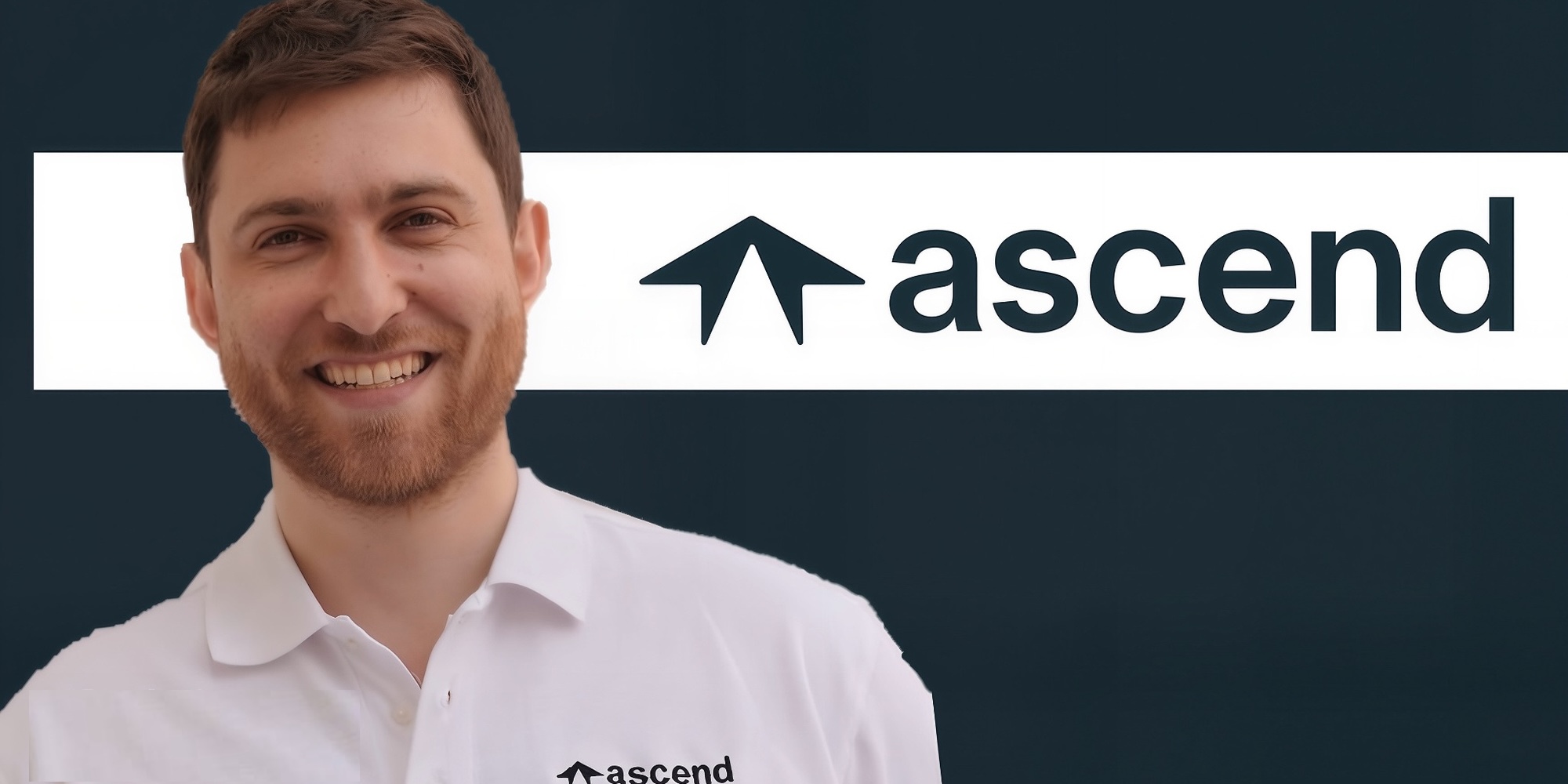
I had the pleasure of chatting with Zach Resnick, the founder and CEO of Ascend (formerly FlyFlat), a membership program for frequent travelers that eliminates 90% of travel decisions and saves 35% off biz/first class flights.
Ascend has been helping my partners Jose and Jeff with all their travels for a couple years now, saving FJ Labs over six figures since we first learned about them.
Prior to starting Ascend, Zach opened hundreds of credit cards, manufactured over $100M in credit card spend, and started three other travel companies. In addition, he started a crypto hedge fund and a blockchain and fintech-focused venture fund.
We covered the following:
• How he opened 300 credit cards.
• Tips to save lots of $ on travel with miles and points.
• Why as a former VC Ascend hasn’t raised much capital.
• How to save time and be healthier when traveling long-haul.
If you prefer, you can listen to the episode in the embedded podcast player.
In addition to the above YouTube video and embedded podcast player, you can also listen to the podcast on iTunes and Spotify.
Transcript
Fabrice Grinda: Happy new Year. I hope you’re all doing very well. It’s been quite a well since we’ve done one of these, but it’s my pleasure this week to welcome Zach Resnick. He’s the founder, CEO of Ascend. One of our portfolio companies has actually helped us save hundreds of thousands in travel and person business class tickets.
And he has a story, the history and past with being a VC. He was, he ran a crypto hedge fund. So lots of lessons learned along the way, and it’s my pleasure to welcome in this stream today. Zach, welcome.
Zach Resnick: Great to be here, Fabrice. Thanks for having me.
Fabrice Grinda: It’s a pleasure. So why don’t we talk, start talking about a little bit of your background because it leads into what you’re doing today.
Zach Resnick: Yeah. From a young age, I’ve always been fascinated by getting a good deal and figuring out creative ways to get them in a variety of different industries and products. But it was really travel where I first got, I’d say pretty obsessive specifically around miles and points. So I had the opportunity to work and live abroad for a year after high school in the US.
And I did that, and it really changed my life. I wanted to spend more time abroad. And I got back to the US for college and I didn’t really have any money. So I learned about the crazy ways that, those with access to American credit can earn tons of, credit card points in airline miles.
And by the time I finished college, I opened a few hundred credit cards and manufactured over a hundred million dollars in spend, and took probably around a couple hundred free business class tickets as well as staying at luxury hotels. For, just points or something close to it.
Fabrice Grinda: Okay. The problem with spending a hundred, a few hundred million dollars in credit cards is you actually paid them as well. So actually, can you explain how that, what you did and how that worked?
Zach Resnick: Yeah, so that’s why I said manufactured spending, not spending. So when, what I would do and what I did for the vast majority of this was I would buy a Visa gift card at a CVS.
Then I would take that Visa gift card that would code as a debit card to a post office to buy a money order, and then I would use the money order to pay off the credit card. So it typically was $4 and 95 cents. Eventually by the end of this $5 95 cents per a thousand dollars card, and then it was 35 cents for the money orders.
Basically 50 basis points to be able to spend that money where I would earn a bare minimum of a hundred basis points, if not an average, probably closer to 1 50, 1 70. So not very high margin, but the manufactured spending itself was profitable. But the thing that made it really lucrative was that I got so many new cards that I would get bonuses, so I would make, tens of dollars on the manufactured spending.
But then each 3000, 5,000, 7,000, 10,000, or bonus threshold, I would make something that’s worth 800 bucks or $1,500.
Fabrice Grinda: And if you are a young college student today, is that arbitrage still available to you or have they climbed down on the ability to do this?
Zach Resnick: So like with all arbitrage opportunities the answer is something similar is available but not the same.
So I’m not personally in the weeds of what the best, new manufactured spending strategies are today, but I know that they’re possible and I know people that are doing this at scale and doing hundreds of millions of dollars a year. But that’s specific one in terms of Visa gift cards at CVS, I believe was closed some years ago, but you could Google things and find stuff.
But obviously all the best ARBs most of our held close to the vest and not shared on podcasts.
Fabrice Grinda: Makes sense. Okay. Sorry. Sorry. Keep going.
Zach Resnick: Yeah so after that it became, really clear that I liked doing this and not, didn’t just like getting free travel for myself, but loved helping others.
So I, when I finished college, I started a travel company that, luckily quickly failed, learned a lot of lessons that way. Near the end of that, I interned for the Points guy. Then I had a couple of travel consulting businesses where basically the product, and there’s a lot of people doing this today, was, let me help you get better at getting all the free money that’s out there for miles and points.
But the problem with that business is that people like yourself for reason. We even texted about this shortly after FJ invested, which is there are things that you can do to. Really maximize the point of you’re earning yourself, but the amount of like time you’d have to spend and decisions and like changing the way that you pay stuff, it’s just like a lot of friction that doesn’t make sense for the types of people that could actually get max value from it.
So then I got a little bit of a detour from travel and focused on crypto as there was pretty incredible arbitrage opportunities in Bitcoin when I first got really excited about it in 2016. And then for basically a little over a year, I effectively ran like a solo trading, prop trading thing for myself.
And that was very lucrative. I rolled that into a hedge fund, which then became a venture fund.
Fabrice Grinda: And by that you mean you could buy Bitcoin in one exchange at one price and sell another exchange that I Higher price instantaneously.
Zach Resnick: Correct. But not instantaneously relatively quickly enough such that the basis risk is.
Fabrice Grinda: Close enough that you can make it work.
Zach Resnick: Yeah.
Fabrice Grinda: Okay. So keep going.
Zach Resnick: So in 2016, I wasn’t competing against that many people, but by the time it was early 2018, pretty much all of those ARBs, at least the ones that I was smart enough to take advantage of that I wasn’t doing programmatically went away. Then found other arbitrage opportunities, other trading opportunities, other kind of more venture liquid stuff, opportunities.
But yeah, went on the fund path, but then, throughout this had this side hustle that kind of started where I would basically help people that I met get cheaper business and first class tickets. And once I went from just running my own and my cousin’s money to taking on LPs I then brought on my co-founder who effectively ran that business.
And I still, would meet people and tell them, Hey, use this. But I was spending pretty much all my time on the fund and then throughout this as I was trying to build and grow the fund. This business or the thing that became this business now just kept growing organically, profitably and people really loved it.
So after many years of trying to make the fund business work and seeing this kind of just keep growing, I made the decision to go all in on what is now Ascend about a couple years ago. And then the business went from its first phase of, basically completely bootstrapped and very hacky to really professionalizing and growing the org and trying to get to work.
Fabrice Grinda: How big did your fund ever get to, by the way?
Zach Resnick: Million dollars across two funds and three SPVs.
Fabrice Grinda: Okay. And your LPs didn’t mind then you said, okay, I’m going to go I’m now going to go I’m not going to go build a company. Or like, how did you manage the transition? It can’t be that easy.
Zach Resnick: Yeah, it wasn’t, definitely, wasn’t easy and, it took me a while to make that decision, even if part of my heart wanted to do it for, before I ended up pulling the trigger. But ultimately, the thing that started the fund, which was a like liquid hedge fund that be quickly became a hybrid liquid and venture fund.
And then that kind of hybrid fund became a fully illiquid venture fund. So all the money that we made from trading and arbitrage in the early days ended up getting deployed. To, companies and a few tokens companies. And then the second fund we raised was a traditional, venture capital fund.
So normal, 10 year lockup structure. So I only decided to go all in on the fund all in on Ascend once we fully deployed fund two. So it wasn’t like middle of deploying.
Fabrice Grinda: So I imagine you’re a potential founder out there. You’re currently at your job. And you have this like side hustle that you’re starting and you’ve started and it’s doing okay.
How do you make the call to, okay, now’s the time to quit my day job, your case venture, but it could be whatever, working at Goldman or McKinsey or whatever, and go and go all in on the startup because that’s probably one of the hardest decisions to make.
Zach Resnick: Yeah, so for better or for worse, I’m a pretty stubborn person.
So I was very committed to making the fund working like probably years beyond when it made sense actually for me and my partners at the management company level. So it really took a bunch of really smart people that kind of knew me and knew both opportunities and were like, Zach, what are you doing?
Like trying to make this fund work when like you have an incredible business that like. You own the majority of that. Like everyone that uses it loves, and you clearly love travel. So it took a lot of really smart, experienced people banging me over the head with that lesson before I did it.
And definitely, one of the things that I don’t really have regrets, but one of the things that I wish I had the wisdom of when I was younger was understanding, how much product market fit I had with this business. Even if it’s infancy Yeah. Relative to the fund business, which I think inherently can’t have the degree of product market fit that a company like mine has.
Fabrice Grinda: Yeah. So I wrote a blog post last year which is called the Universe is Whispering at You, and it whispers at you in various ways, but one way is, oh. It’s hard to raise more LP money for the funds. Oh. Like all the things I’m trying to do in the day jobs, it’s not really filling my heart with like joy and happiness, et cetera.
It feels like work. And the other thing seems to be going well, follow the flow. And most of us, especially when you’re a ambitious, hardworking founder like we think we can bend reality to our will. And the reality is we can’t, but there are many cases where we should not. And if something’s not working, yes, it could make it work, but you know what?
It’s probably not meant to be for you. Go do something else.
Zach Resnick: Exactly what should have happened was I should have taken the signal from the market within a year or two and not continued with the fund and raising a second fund and doing SPVs, but I so wanted to bend reality to my will that I made it work just enough to be able to barely pay myself and others, but not enough to it, really have it flourish.
Fabrice Grinda: What were the signs and like, how did you know you had product market fit in a sense to give you the confidence okay, that now is the time to move. Was there real product market fit or did it feel like a big leap of faith when you made the jump?
Zach Resnick: No, we were doing a few millions of gross revenue and a million in net revenue with great margins when I made the jump.
So again, I waited way too long to do it in terms of what made like business, economic, personal sense. But to me, some of the things that I think most embody product market fit are when you have extremely strong referral growth. You can have a product market fit without that. But for us, even at our scale today, we’ve almost exclusively grown by referrals and word of mouth, and we’re changing that now, but.
The fact that people have such a great experience that on average they refer multiple people every single year I think is a great sign that you have product market fit. And then of course, just the numbers on retention. Over the last year, we have 94% retention over the last 12 months.
Prior to that is even higher. And then of that 6%, it’s not really people that travel with Nvo now it’s people that stop traveling because they have less money. Their company ran out of business or they like had a baby and they’re not traveling. So really, I think retention and referrals are two of the biggest levers of understanding product market fit.
Fabrice Grinda: Why don’t we talk actually about the product, like what is it you do exactly for people and why should they use you.
Zach Resnick: So Ascend is a white glove concierge service that handles every travel need that you know you can possibly have from getting A to B. Designed for people that care about both saving money as well as like time and stress.
So our kind of target market and people that we serve best are people like yourself, Fabrice, and your partners. Because, professional investors, especially like venture investors, growth investors, private equity investors, they care deeply about saving money and love the kind of game of doing that.
Jose specifically is one of the most talented and knowledgeable folks on saving money on travel. And also about your time is really valuable. So really understanding that, hey, if I get to remove 10 decisions every trip compounded over years, that’s actually worth a ton for me. So our product is basically just a team of concierges that work tirelessly around the clock.
70 people worldwide that average a 22 second response time every second of every day. It’s never more than 60 seconds, no matter what. And we handle your commercial flights, your private aviation flights, your helicopter rides, your villas, your hotels, your, trains, rental cars, really everything besides like planning activities for a vacation.
So everything we do is if you know where you want to go or even just have an idea, we will help you do it as efficiently as possible at the absolute best price.
Fabrice Grinda: That sounds like a services company or an agency. Like why is this a venture backed, scalable company?
Zach Resnick: Because on the backend, we’re using software to make things wildly efficient.
So if you look at a lot of the top funded companies today in venture, it’s companies that many years ago, the consensus and venture would say, Hey, these are services companies. This is actually not a good idea. It’s not very scalable. Where I think a lot of smart investors are understanding now. That actually services are a much better business where you can capture a lot more of the value and provide more value.
And the way that I think of it is less around I’m a service business versus software business, and it’s more do I take ownership of the problem or not. So when you look at most traditional SaaS businesses and marketplaces that you know very well historically, these are things that really help you solve the problem.
But fundamentally, when you use air Airbnb, they’re not taking ownership of the moment from the idea to when you get to there and when you get back home where we are. And as a result, we’re not really charging what we could for in terms of take rate, but we can even today charge a lot more for it than just a pure, because we’re not just, giving you inventory, we’re making the entire experience easier.
And, ServiceNow and a bunch of, top startups today are fundamentally service companies that are wildly efficient piece of technology on the backend, but it’s still real humans that own the relationships with the customers on the front end.
Fabrice Grinda: Do you think there’s a moment in time where AI will own the relationship or do you think this is has to be humans and bespoke? Because these are obviously high spenders and people that like, that personal touch.
Zach Resnick: So using a couple people that you know much better than I, Jose and Jeff have never said, Zach, I love what you’re doing with Ascend, but let’s have fewer humans and more AI chatbots. And actually no one of my customers have ever told me that.
So in the world of AI, when AI is replacing, humans via voice and via text, having smart, competent, empathetic humans you can text with and speak over the phone with in real time. Will become more and more valuable. So is there a point in like decades down the road where maybe AI will get so good that it’s more empathetic than a human and the world’s different?
I’m open to that possibility, but for at least the next decade, I feel very confident that my customers will continue loving the fact that they get to speak to humans on the front end. And having those human relationships in an era when you have to work harder to, find products that have that.
Fabrice Grinda: There’s a notion by public market analysts that, oh, all these travel sites, Expedia, booking, whatever they’re going to be in trouble because people are just going to go to the LLM and say, Hey, I want to go to blah and BLM is going to automatically find the best everything and automate everything.
Do you think that’s a real concern or do you think it’s like completely overblown?
Zach Resnick: No, I think that’s a very real concern for OTAs. But we’re we are the chat, so basically, a big thesis we have is that a chat first interface, whether that’s purely agentic, like just typing in travel stuff to Claude or going to someone like Ascend is a much better experience than using a traditional OTA, using a traditional kind of managed corporate travel portal.
And then of course, better than a traditional travel agent. But our bet is that the fact that we have now over 120,000 conversations with some of the world’s top, top capital allocators and founders will allow it. Using some of these great models, but a rag and agentic kind of interface on top of that, that leverages our data, will provide a much, much better chat experience than just one of the models off the shelf and even almost any other travel company because we’re taking a very specific approach to what service looks like for a specific type of discerning customer.
And building on top of that and having humans in the loop at every stage so that instead of having training be this like thing that happens in its own isolated way. Every concierge today is training our model and training the conversations that will train future models on by actually interfacing with customers and using their judgment in our portals.
Fabrice Grinda: How can you really save people like 35% or whatever in a business or first class trip like it feels like. To a non-expert in the category that, this is commoditized. I go to Kayak, I say, okay, business first, this is the flight. Maybe I even could plus two, three days go. Why could we do better than just like whatever Kayak is going to get?
Zach Resnick: Yeah, it’s a great question. So a lot of this comes from just a structural different way that we make money. So when you look at the way that you know, a kayak and Expedia makes money on flights first off, they don’t really make anything on flights. It’s all on like hotels and everything else, but on flights, they’re not getting paid by really you as the traveler.
They’re making a commission on the backend from the airline. So for them it’s all about volume. And how many basis points can you beg the airlines to give? View where for us, we’re taking more of a, Hey, this is a really inefficient market. There’s different point of sales, different currencies, different, co-chairs, all these different things all around the world.
And rather than say, Hey, we’re going to try to put all of our volume in the traditional way and work directly with the airlines, we’re going to fight on behalf of our customers to book things in creative ways and take advantage of some of these inefficiencies. So we’ve, we’re doing that for years, manually, and now we’ve used software to scale many of those things and still have a lot more on our roadmap that we’d like to do.
So I’m not going to get that much more specific on this public live stream, but anyone listening that wants to understand the strategies in depth, you can sign up at join Ascend and near one of my team will halfway tell you on a call.
Fabrice Grinda: And you’re doing, is it mostly flights or are you also, you’re doing accommodations, car rentals and everything else?
Zach Resnick: It’s really everything that you need. So when I think about, hey, how, what does Jose need on his travels? What does Jeff need on his travels? Most of the value that we provide is on flights and hotels. But hey, if a rental car is needed, if a car service is needed, great. There are certain airports where, especially like if you’re an American and you’re going to a new country for the first time paying an extra 50 bucks and I have to navigate, Uber in a foreign language can make a lot of sense.
Flights and hotels is where most of our volume is still, most of it is on flight speed. Historically, we used to just do that, but for, most of our good customers now we’re handling really every travel need that they have for both personal and business reasons.
Fabrice Grinda: And how big are you? Like how many travelers or how many trips? Like what’s the good measure of your scale?
Zach Resnick: Yeah, so today we have about a thousand customers, and some customers are individuals. Some customers are like FJ Labs, where we effectively handle almost all of, Jose’s and Jeff’s travel. But that’s just one customer. We have some people where it’s, Hey, it’s one customer and then it’s a five person family.
So it’s roughly, 1600 travelers, a thousand customers that we have the relationship with and that we built, bill. Historically we didn’t use to everyone required to be on a subscription. We would give full service for people that were members and then we’d give like a limited just discounted business and first class deals for the free tier.
And now we’ve taken away that free tier and it’s just serving members to take advantage of everything. So to, we expect to get to at least a thousand members by the end of this year and then, 5,000 by the end of 2028. But hopefully we’ll do a lot better than that.
Fabrice Grinda: So if you’re launching a subscription service if you look at and obviously it’s a completely different product, but if you look at the app store, something like Calm or Headspace or whatever, there’s usually three days or seven days free.
And then, so the free tier, if you want that, and then you have to pay or if free tier like how do you, how did you decide, okay, no, the free tier doesn’t make sense. Like how would you recommend people test this and decide what the correct go-to market strategy is?
Zach Resnick: Yeah. So because we’re a, white glove concierge service and we’re scaling we’re not just taking anyone that wants to sign up.
We’re only taking people where we know that we can save them at a bare minimum, many thousands of dollars a year and dozens of hours. And if it’s not that, we’re not going to take our people’s time to serve you today, at least with where the product is. So because of that, we wanted to make sure, hey, we’re only going to be serving people we can add tons of value to rather than just anyone that we can get, which is what we did when this was more of a bootstrap side hustle.
So today if you sign up and your application is accepted, you then get a free month of being able to inquire about anything, and then you can book one trip with us before needing to pay for membership. And then following that you’d have to be a member to be able to work with us, and that’s $2,500 a year or 300 a month.
And then for enterprises it’s, custom pricing where we can do a lot better than on average 300 per person. Especially when some people aren’t super frequent travelers in the organization.
Fabrice Grinda: So I think, if I’m not mistaken, you said originally you bootstrapped this, did you have to put any capital or it was profitable from day zero? Or like how did this get going and at what point did you decide, okay, I need to raise external capital and like any recommendations there? Because some ideas probably can and some cannot be food strapped.
Zach Resnick: Exactly. There’s some things where it’s like, Hey, if you want to build enough space next SpaceX, you can do it capital efficiently, but you’re going to need a hell of a lot of other people’s capital.
What I always recommend to people that haven’t been really successful in startups and entrepreneurship before is to find a business that at least you can bootstrap if you wanted to, for the foreseeable future. Because the probability that you will succeed is just so much higher. And having success and then compounding that I think is makes it just a lot more likely you do bigger and better things in life versus have something that’s super hard and stressful and then be turned off by the experience.
Because this was like a side hustle. This was profitable from day one. It wasn’t like a, I only did it because on every transaction I made money and provided value for people. That being said, as we grew I did put into my own money to the business to, basically make sure that working capital made sense.
And, at certain points specifically, like at the beginning of COVID was definitely a little underwater there, and we did raise, I think it was $60,000 in total. During COVID just because, travel stopped for a couple months. But in terms of how I thought about raising capital, which was basically when I went full time into the business, I was like, okay, listen, I can keep bootstrapping this, but there’s such a big opportunity.
I know I have product market fit, and given we’re at a few million in revenue, I could raise a million and a half from great investors, including FJ Labs and not take on that much dilution. It was under 10% to be able to do that. So for me at that time it made sense. My biggest piece of advice is to raise money for your business model and not for a VC’s business model.
And there’s certain businesses that play the traditional venture game really well, like deep tech, really ambitious. You want to do that from day one for our business. We may end up raising future rounds depending on if that makes sense for our business. But at every single point in our business, we’ve always had the luxury of being able to say, we do not need to raise money to stay default alive.
And every time I’ve raised the two times we’ve done before, and I’m currently in the middle of a raise now. We’ve say, okay, does this make sense for us in this time? And do we need to do something crazy Herculean to be able to get to the, next milestone or then we run outta money or we have to lay a bunch of people off.
So that’s the approach that’s worked for us. And, that’s only really been possible because we’ve been such a high margin, high take rate business from the beginning. So certainly there’s a lot of really great businesses that are lower margin. And I think there’s actually a good argument that if you’re talking about the most valuable business that.
An extreme degree of scale, you actually can’t really have high margin businesses because competition will just inherently erode that. And some of the best businesses in the world, like Costco and Amazon are, famously extremely low margin and will basically never take meaningful margin outside of AWS.
And that’s a strength, not a weakness at their scale. But I think for the vast majority of people listening, having a business you can bootstrap, that can be high margin. And we’ll just make your life so much easier. Give yourself so much more, flexibility for things to not go as planned and still be in business and be alive.
So that would be my strongest piece of advice, which is that every given point, do what makes sense for your business. And if you’re a great founder and you have a great business, you will get great capital partners to make exceptions. To how they say that they invest because they understand it’s a great business.
Fabrice Grinda: Did you have evidence of product market like day zero? And at what point did you know this was scalable?
Zach Resnick: So yes, we had it at day zero because. The very early version was text Zach on WhatsApp and he’ll hook you up with a super cheap business class ticket. And the first time that happened, it was like, oh my God, this is freaking awesome.
I’m going to use you for all my future flights and I’m going to tell everyone. So definitely from day zero we were lucky to have it. And again, I was lucky to just fall into this. I’ve been doing stuff in this industry and adjacent and, but this was the thing that just really hit and it was super clear from day one.
Yeah. I, sorry, there’s another part to your question. Beyond if day zero.
Fabrice Grinda: Obviously, WhatsApping Zach is not super scalable, so that’s point. How did you realize this was scalable and you could scale it and you could find a way to make this work?
Zach Resnick: Honestly, until earlier last year, I didn’t have, let’s say, the extreme conviction I do now that this is very scalable.
The advances in AI have really made a difference in terms of just a clear path towards scaling this business. Earlier on, it was very clear Hey, we can scale this as a services business with a few people, be very profitable, have very happy customers. And because this was just a side business of mine, that was all that we did.
And I made a few bets, in terms of hiring contractors and engineers, hiring a friend to do some stuff, but not having this be my time and focus, it was never something where I was like, oh yeah, we can definitely scale this and have it be really big. When I really dove into the business, really every week that I work on this company, I gain confidence in the ability for it to scale.
And I think when you’re looking at what can. Be a great business that scales, it’s actually a lot more important the market than the product itself. And if you’re, have enough demand and you’re innovative enough, you can figure out a way to scale and. Take in that demand. For us, travel is one of the absolute biggest markets in the world.
It has incredibly low NPS. It’s super fragmented and the pain and suffering that even someone like yourself goes through traveling is just so unnecessary in 2026. So there’s so many ways to solve the problems there that even if for some reason advances in AI didn’t happen, I worked in this five years earlier, I’m sure we would’ve pivoted or done something else to provide more value for people that are traveling internationally all the time.
Fabrice Grinda: So beyond, obviously using Ascent to save money and Time.
Zach Resnick: Yeah.
Fabrice Grinda: What are your like tips and recommendations for people that are traveling?
Zach Resnick: Yeah, so what I would say is basically, first off, really understand what you’re optimizing for. So broadly speaking, I think, if you’re listening to this, you should go to one of two domains, which is use Ascend or something like Ascend to like really outsource everything you can.
If you don’t have a executive assistant, a virtual assistant, get one and just figure out how to have better leverage for your time. Or if you want to go down the rabbit hole that I personally love, you can get really smart. Especially probably most listening people listening to this are in the US.
Learn the points game. The points game is one of the biggest free lunches that exists in the United States right now. If Trump’s new, truth or tweet comes through, that might change, but probably not going to happen. But for people to understand why this is the case. So in, in Europe actually where I live currently, there are mandates in terms of the amount that a credit card processor can take.
So in the US you’re typically taking anywhere between 2.5 to 3.4%, and then most of that ends up coming back to you in the form of points or rewards. Where in Europe you might be limited to, instead of 300 basis points, 25 or 30 or 40. So there’s inherently just less of the pie to go around.
So the reason that I think this is the best way to, to get started is because there’s just so much kind of juice. It’s a very high margin business that these, companies like Amex and Chase are very generous with the points because they can afford to be, because having you as a lifetime customer for a credit card or for a mortgage sodium profitable for them.
So first step to be able to do any of this stuff is figure out how to get great credit. If you don’t currently have great credit. There’s lots of great resources out there on how to do that. But in short, you want to pay off your cards on time. You want to have cards that are open for a while, you want to be able to have different types of credit, so you actually get penalized in the US by not having different types of debt.
If you’ve never gotten a car loan, get a really small car loan. If you own a car, that’ll actually increase your credit when you pay it off on time. Take a really small personal loan off and pay it, off in advance. These are things you can do. There’s individual concierges that you can work with that will help you increase your credit really quickly.
But that’s step one. You have to get a good credit to get these premium credit cards, and then once you get the premium credit cards. You can do the manufactured spending game. But I think for probably most people listening to this, what you really want to do is just make sure that the cards that you’re spending on everyday purchases are the right cards.
So there’s different levels for this. I’ve opened close to 300 credit cards at different times in my life. I’ve had between eight and 12 cards that I’m using regularly for different purchases. But there’s an efficient frontier where probably like the right one to three cards will give you 80 to 90% of the benefit.
And then that’s takes care of the earning side. So let’s say today, you are a professional in New York City that makes between a hundred, $200,000, you’re spending at least 30 grand on a credit card. Most of it is on, travel and dining. And you want, and you like staying at nice hotels, you should probably have either the Chase Sapphire Reserve or the Venture X Card.
Maybe you get one or two cards after that, depending on your other categories. And now for your spend, you’re looking at, if you’re doing it right, at least six figures a year of points. So now that takes care of the earning side. Now the spending side, how do you use those points? So a lot of getting great value in travel and points comes through understanding where and when you can and can’t get the value.
So I’ve had countless conversations with people where it’s like, Hey, it’s Spring Break Public School’s out in New York, and I want to take the flight on that Friday or Saturday, but I don’t see any good points deals. You’re never going to see good points deals because those are really high demand, flights.
The way to get the good points deals is by traveling at times when people aren’t traveling or being flexible enough to book your travel last minute. So you have to have some degree of flexibility, some degree of knowledge, and really you have to love the game. So when I talk about this, I, as you can tell, get really excited.
Even the fact that it’s totally not worth my time to do. I still book some of my own flights. I still look at stuff ’cause I just love the game. If you’re hearing this and you’re not super excited, this should not be for you. This is a waste of time. And go work on your business. Work on your job.
Don’t do this. One of my favorite beginner’s guide when it comes to points is one Mile at a Time. That’s the only travel blog I still read religiously, Ben Schlappi there. He’s amazing. So beginner’s guide there. But yeah, those are, I’d say the high level beginner points for how to get started with point stuff and always happy to be a resource there.
And one of the things that, we also do for our clients, which is, we don’t just book cash tickets, we’ll also give you a free quarterly consult. On the latest end points in travel, so we can help you use your own points and advise you, even though if you’re using most of us, using us most of the time for cash tickets.
Fabrice Grinda: Anything we didn’t cover that we should have covered?
Zach Resnick: Yeah, I think another tip on travel is just not just the money part, but how to save time and how to be healthier. So this is becoming more and more mainstream, but doing travel, especially long haul international travel is really tough on the body and the difference between optimizing your workouts and your meals and your blue light glasses and not, could be the difference between you getting there and being like top shape to raise some money or like feeling dead for two days.
So I, post about this lot of LinkedIn, hopefully starting some social media videos on this soon. But some of my biggest tips are use the app time shifter. It’s really good when you’re doing, long haul international time zone travel. I also highly recommend using blue light blocker glasses.
I don’t have some at my desk here, but I use them all the time. Use them two to three hours before you go to sleep and then use them. Based on your target time zone. So let’s say you are, in New York and you’re going to Paris, which is maybe a trip that you have some familiarity with Fabrice.
You should start wearing blue light glasses at the airport based on, Parisian time and not based on New York time, the day that you travel or maybe even the day before to get your body ready. So there’s lots of things you can do also on the plane. Get up whenever you can, do some squats, do some calf raises.
It really helps. There’s a lot more optimizations from there, but generally speaking.
Fabrice Grinda: What about melatonin for the three, four or five days post travel?
Zach Resnick: Yeah. I personally use melatonin, like when I need it to be able to fall asleep better. One of the big mistakes people take is taking way too much melatonin, so really, you should be taking a relatively small amount compared to what supplements are out there.
Encourage you to do your own research, but that really helped me once. I learned that a few years ago.
Fabrice Grinda: Okay. Anything else we didn’t cover?
Zach Resnick: Yeah, so what we were, DMing about some of these kind of lessons. But, I wrote these down here, but just something that I wish I did earlier was just really working on developing my intuition.
So a lot of people listening to this are probably very analytical people and a lot of people think that there’s a conflict between being intuitive and being analytical and they’re just different. But I actually think they can support one another. And ultimately, almost all of the most impressive individuals, whether they’re investors or creatives or founders that I’ve met, have incredible intuition.
But that intuition necessarily come from day one. They actively worked on it and developed it and tried to understand what it’s like to trust their gut and trust their body. I didn’t even really understand what that meant for the first, 20 years of my life. And now it’s something I work on a lot, and I think I make much better decisions by, I still go through everything analytically in my head.
But when I actually need to make the decision, it’s coming from my gut versus the head. I don’t know Fabrice if that maps your experience, but one of that.
Fabrice Grinda: Totally maps. Look at first you do the work, you do, you need analysis, but if you have enough at advance iterations in whatever we did, like at this point, every year I speak to so many hundreds of founders, I tell, I can tell very quickly.
And same thing like, do I think the business model could work based on what they’re prescribing? Very likely. It like it all becomes intuitive with enough at best. I think the, there is an in the book Blink by Malcolm Gladwell where it talks about intuition. Basically if it’s something you don’t have any experience at, don’t trust your gut because then it’s 50 50.
You’re not an art critic, so if you look at something isn’t real, it fake, you have no idea. But if the art expert who’s looked at thousands of things intuitively being something’s fake, it probably is. And so same thing here in your case, if you think so, of is a good deal, probably is in my case. If I think a startup is good or founder’s great. It probably is.
Zach Resnick: Yeah. Another lesson here is the I don’t, as I’ve said, I don’t really have regrets, but as I get older, I’ve been lucky enough to pretty much always work for myself and do various kind of hustles, entrepreneur things to be able to make money.
And besides my internship at the Points Guy, it’s always been my own business, my own thing. And now that I’m really scaling a company and working with not just a small group of people, but with a lot for the first time in my life, man, I really wish that I had some of this experience of how to be part of a team, how to be a better leader prior.
I think there’s a lot of glorification of being a founder in, the media. And I, for me, it didn’t so much come from being in tech or knowing about startups. It just. I just always so stubborn and so independent that I couldn’t imagine something else. But I actually think for people like me, pushing yourself to get experience working for someone else, even if it’s hard, even if it doesn’t feel good, if your goal is to eventually build something really big, doing that sooner than later so that you learn those hard lessons when you’re, at something lower stakes in someone else’s dream versus on your own dream. And it’s the first time you’ve ever been at 20 million in revenue and you’re learning that with people that are way more experienced around you.
Fabrice Grinda: Kind of what I did actually. So I consider myself unemployable from the very beginning. Like the idea of working for someone else and having a job like nothing could feel more. Boring and un uninspiring and not compelling. Yeah. But when I graduated college, I was 21. It was like, Hey, I’ve never, employed anyone, managed anyone, et cetera.
I don’t know anything. Yeah. I build my little sole proprietorship, like side hustle. But yeah, I went to McKinsey, and McKinsey was like business school, except they paid me. He was like, okay, how do I manage people? How do I work in teams? How do I work in my oral education skills? How do I write a deck and pitch an a business idea?
How do I evaluate business ideas? And I didn’t particularly love it. I got, the people there were amazing, but like the job itself is not that compelling. But it was yeah, it was, I thought something useful to set the stage for learning how to manage a bigger team and run a company.
Zach Resnick: Yeah. So I’m learning that on the fly right now with my very patient, team members. And I trust that I’ll likely work on this for decades to come, but if for whatever reason that doesn’t happen I think probably working with other people, could be a great thing to round out the experience or something. I never thought I would say.
Fabrice Grinda: I’m not sure I buy it to be honest. If I had to do it again, I’d probably skip it. I think you learn so much faster on the fly. Are you going to make every mistake in the book? Possibly. Will you probably blow up your first startup as a result of it?
Absolutely. Yeah. But are you going to learn? I think it’s a more fun way to learn than a work someone else and may, maybe working in a startup is so hard, like I, I think. I think that could have been the way to go, like work in a startup, but like earliest early enough stage like A or B, not beyond that otherwise it’s already too structured to make the most of it.
Zach Resnick: Yeah, I think it’s much more about just having the reps with other people. Like most of my businesses have been very I’m the business, I’m doing everything. Or it’s like me and a few people and it’s very bifurcated. So a lot of the like, communication stuff that happens when you start having, the 70 people we have today, it’s just all extremely new.
And again, I think I’m learning quickly. I have to because I want to make this thing work. But could be nice to happen another time, but again, the grass always greener and this is the way it happened. But I think for me the lesson is more just like if you’re someone that imagine yourself as unemployable, especially if there’s opportunities to work with, like people that you respect and really like maybe give those credence versus just writing it off as I need to do in my own time.
Fabrice Grinda: Makes sense. Congratulations on getting to where you are and all the success and Yeah. Hopefully with. Many more people are going to use this in scale.
Zach Resnick: Thank you for all the support Fabrice and FJ Labs. You guys have been great investors for us and partners, and appreciate you having me on your show today.
Fabrice Grinda: Thank you so much. Perfect. Thank you for joining.
Zach Resnick: Okay, thank you.