


Startupable Podcast with Enzo Cavalie





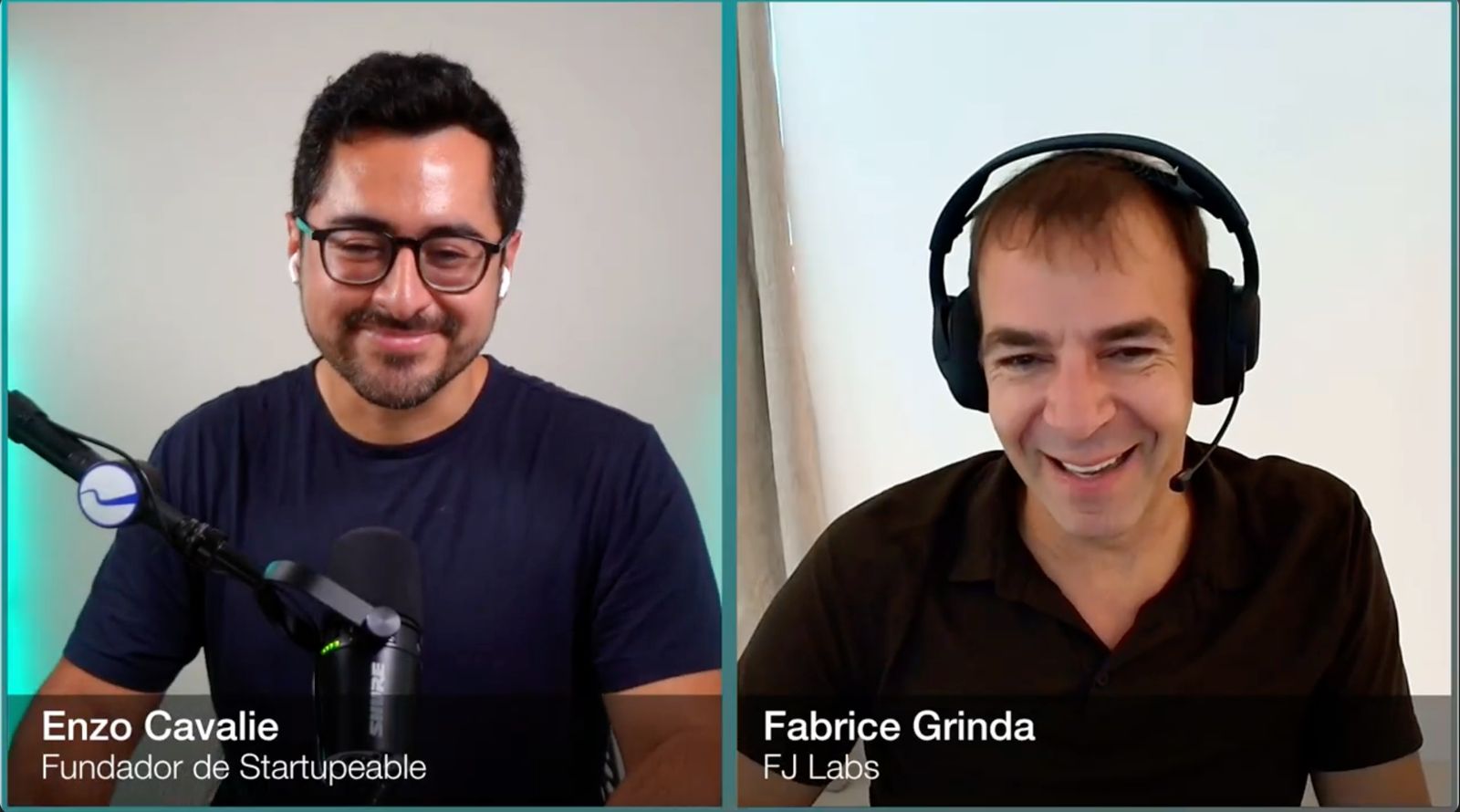
I had a wide-ranging conversation with Enzo Cavalie about the best opportunities in tech today.
We discussed:
- 01:00 – Why being a public company CEO stopped being interesting
- 22:00 – Will AI kill marketplaces? The real impact on e-commerce
- 27:00 –The next big play: buying offline businesses and 10x’ing them with AI
- 33:00 – The trillion-dollar opportunity in B2B digitization
- 49:00 – Do AI startups really need less capital?
If you prefer, you can listen to the episode in the embedded podcast player.
In addition to the above YouTube video and embedded podcast player, you can also listen to the podcast on iTunes and Spotify.
Transcript
Fabrice Grinda: I see it, ChatGPT to me is an existential threat to Google because OpenAI is very aggressive, very smart, and they are very ambitious. I am sure that they don’t want Midjourney to win in images, and they don’t want Runway to win in video, and they don’t want Cursor and Lovable to win in coding, etc. I think it’s way more of a Google situation where they’re going to try to win as many of the verticals as they can.
Now they have to choose where to focus on.
Enzo Cavalie: Hi, Fabrice. Welcome to the show.
Fabrice Grinda: Thank you for having me.
Enzo Cavalie: It’s great to have you. As I told you, I’m a big fan of your content and story as an investor. But I think I’d love to start on a more personal note because you had a huge success with OLX, a company that people outside the U. S. I’m sure have interacted with. I’ve interacted with it as a user, as a consumer. Growing up in Peru and in Mexico and you had the exit, so it was everything was great, right? Global recognition is a big amount of money, the validation that you made it. But I’ve read that it was very anti climatic for you and you end up deciding to take a different path.
So take us to that moment. What did you feel specifically that forced you to? change your life in a radical way.
Fabrice Grinda: So it wasn’t really the exit that was the issue, right? Like the exit we was in like 2010 and I, they gave me the money to win the war. And so then we win the war where they’re our biggest competitor.
We merged 51/49 for us. And all of a sudden we’re a 10, 000 employee company in 30 countries. And I wake up one day and I’m like, look, on paper, I’m top of the world. I’m a CEO of this huge company. Everything’s amazing and insane traffic. People love what we do. We’re getting love letters from users.
And because we have so much traffic, every test we do is statistically significant, all the VCs tell you, Oh, do A B testing. When you have 20 users, A B testing doesn’t mean anything. It can be like random, a random decision by a user, like completely messes things up. And but when you have 20 million units a day.
Everything’s statistically significant. The problem is I just felt bored. It was like, I’m a product CEO. I like the playing with the product and having a highly skilled team that was small moving very quickly. And all of a sudden we’re part of a large publicly traded organization where we need to create an annual budget, a quarterly budget and updated the quarterly budget.
And the job was just not compelling. So on paper, It sounded fantastic, but the day to day was very not, it was not interesting. And I’m like, the point of actually being successful is to live the life you want to lead, not to not to be recognized. The recognition doesn’t do anything for you.
Enzo Cavalie: Do you think that’s inevitable as a company grows and becomes successful?
Fabrice Grinda: It maybe is not inevitable if you keep being the master of your own destiny, meaning if it remains my company, the problem is, in order to get the funds I needed to win, I had to do a deal with natural process.
They ended up being the majority owner. So it was no longer my company. And so they didn’t want me playing with product and doing the things I wanted to do. So I think some people have been able to retain it for a long time. Steve Jobs at Apple was able to do that for a long time when he came back.
So it’s probably true with Mark Zuckerberg and probably to a large extent with Jeff Bezos. But that was definitely not true anymore at my own company. And so I’m like, job is not interesting anymore. I’d rather do something else. Also, as a kid, my dream was to be a public internet CEO.
The thing is being a public CEO changed a lot between the 1980s when I was dreaming about it and the 2010s where all of a sudden you have like section 404, Sarbanes Oaksley, and it became very uncompelling to be public. Not to mention you give all your information to your competitors. So I’m like, if I have to do it ever again, I would rather not go public.
Enzo Cavalie: You’ve written about questioning society’s default path, and we’re in this particular moment where we’re in this gold rush because of AI, and I’m sure founders are facing similar situations. To what you’re describing in the sense of having to raise capital, being in customers, partners that you might necessarily don’t want to bring, but you have to win the war, right?
So I know you see, having that introspection when you are in the grind growing, scaling, it can be a luxury or it can be very hard to do. So I’m curious, how do you talk to founders about this experience and how can they audit, in a sense, their life so they are not end up living in a version that they’re not going to really enjoy.
Fabrice Grinda: That’s true in general. Your life is extraordinarily busy. It doesn’t matter whether it’s your personal life, your business life, and it doesn’t even matter if you’re in a startup or not. You have infinite things to do and it’s very easy to just keep going down the path. You have a job, you go to the job.
You have a relationship, you stay in the relationship. You have an apartment you live in, you go to that apartment. Obviously everything’s, that’s the easy default path. Plus there’s default societal path, I go to high school, I go to college, I get a job, I get married, I get 2. 2 kids and 1. 3 dogs, whatever.
I move to the suburbs, I get a white picket fence and I want to shoot myself. You need a forcing function. So the, my recommendation is once a year, send yourself an email, a, you take a weekend, you take a night where you’re basically assessing where you are in your personal and professional life. How happy are you on a day to day basis?
Not the theory of it, the reality of it, not the best day, the average day. What is it you’re doing? What is it you like about what you’re doing? What is it you don’t like about what you’re doing? And in completely freeform fashion, brainstorm with yourself. And this is, I like the, and the reason I like the email is it forces you to structure your thoughts.
Because they may be on your mind, but it’s not very well articulated. The email forces you to, okay, these are the things I really like. These are the things I really dislike. These are the things maybe could be improved. And this is maybe what I can do about it. And then I also like to have a free form brainstorming myself.
What else could I be doing? What are all the other paths I could be going down that could be just as compelling or more compelling? And what would not the ideal day be like, but what would the average day be like? And then I share it with friends and family and ask them, if it was you, what would you do?
Knowing me, what would you do? We have conversations. And often I just try these things. But usually, if you have the sense that something is not right it’s usually a sense that it’s already too late. You should already have moved on, right? If you’re not happy in the day to day, hard to fix. And I think that’s true with employees.
If you feel someone is probably not great, and you need to have a performance review, whatever, it probably means you should already fire them. If you’re in a relationship, it’s and you’re bored, whatever, you probably should have already moved on. And this is true of the company you’re at, if things are really not feeling right.
Because often if you’re grinding hard, it could actually be fun, right? And so that’s not the wrong feeling. The wrong feeling is you’re not getting product market fit. You don’t like your co-founder. You’re working hard, but it feels like it’s a grind versus fun. Like you can work hard and have it be fun versus work hard and have it be like, I’m eating glass because I must or whatever.
And so taking a step back. And I often like to do it off grid, by the way I’ll go in the middle of the jungle with no connection, no WhatsApp, no meetings, etc. So I could actually be reflective of my thoughts. I just have taken my notebook so I could write.
Enzo Cavalie: I love that. And it’s such an interesting way of looking at it about thinking of the average day and not the best day or the worst day, right?
It’s super clarifying. Speaking of this type of audits, I hear you outsource everything you can from scaling to photo albums. You have multiple EAs, non-executive assistants, which is, I think it’s not that common. And we’re now moving into this world where basically because of AI, you could literally delegate everything, or maybe not today, but we’re getting closer to where we could delegate everything, right?
Not just logistics or coordination, but judgment, creativity. So I’m curious, how are you thinking about what should you gladly hand over to AI and what are things that you should probably never delegate? Because they give you your edge or they make you yourself, in a sense.
Fabrice Grinda: Don’t delegate the things you like doing, right?
I don’t like cooking, so I have a chef. And I, I think go buying the groceries and all that takes infinite time. But some people love cooking, in which case they should not delegate it, right? I abhor administrative tasks, so I have the two virtual assistants in the Philippines that organize everything from the calls to paying bills to, finding a local tennis partner I can play with that’s on my level and like booking it to when I create a photo album or a video, I see myself as a creative director.
I have a vision of what I want to create, and then I have other people execute. Now, right now, those are humans because it’s actually way easier to work with humans or qualify than with AI at some point. And that’s it. I’m a power user of ChatGPT. Absolute power user, but for many tasks, it’s not nearly as competent.
Now in my personal case, I like being the creative director and I see myself as having good judgment. And so while I will have GPT give me opinions, perspectives, et cetera, at the end of the day, The judgment, the decision I keep to myself. And I think that’s why I compare advantage as a VC where I’m picking which startups and interpreters I’m backing and frankly in life as to what is it I want to be doing.
So outsource the things you don’t like to do. Keep doing the things you’d like to do, regardless of whether AI could be better at it than you.
Enzo Cavalie: I love the framing of a creative director and now like to go deeper into investing. I love this image of, and I’m sure you’ve seen it, of Craigslist. That spawning hundreds of vertical businesses like Airbnb, Indeed, a StubHub, and I think there’s many more, there’s like tens or probably hundreds.
And each one took a category and did it better. And you just mentioned in being a power user of ChatGPT. Do you think, or is it possible that ChatGPT is in a sense the new Craigslist for AI?
Fabrice Grinda: So I think that’s the wrong analogy because Craigslist was obviously not motivated to win any of the verticals.
And so a thousand people went on and built better vertical versions and same thing happened to eBay, by the way, where people took better each category of eBay and attacked it vertically. When you have a large player that is trying, that is good and competing, they try not to be verticalized, right?
So Google. One, every vertical of search, maybe except kayak for travel and Amazon one, most e commerce categories, maybe not Chewy me and there’s still others that, that emerge, but like the horizontal and common player can actually win many of the verticals if they focus on them and OpenAI is very aggressive, very smart, and they are very ambitious.
I am sure that they don’t want majority to win in images and they don’t want, they don’t want Runway to win in video and they don’t want Cursor and Lovable to win and coding, etc. So the, I don’t think so. It’s not at all like a Craigslist situation. I think it’s way more of a Google situation where they’re going to try to win as many of the verticals they can.
Now they have to choose what to focus on. And there’s things AI is very good at and so they’re going to try to, and I think they’re going to focus on like the low hanging fruit. So coding makes a lot of sense, the 11 laps type thing where you have people’s voices, images, etc. Makes a lot of sense. The image generation, video generation makes a lot of sense.
But do I think they’re going to replace Top of Fuddle? No, absolutely not. But as I see it, should GPT to me as an existential threat to Google, because I tried, I’d never go to Google anymore. I just go to GPT is I want this to get one reply. That’s the right one done. So yeah, no I, will there be verticals though?
Absolutely. Because there are many verticals that they want to focus on and that, that are not going to be economically viable, or maybe you have, you need vertical specific data, and if you have that vertical data set, you’re going to get so much better answers than a general LLM. So there will be winning verticals for sure.
And which ones emerge versus which ones GPT wins is, it’s unclear and it’s all a battle to be played for. And so the early winners may not be winners forever. And so the people that are putting these insane valuations on Lovable and Cursor, etc. I, I take this with a grain of salt because these are the types of categories where I could see a ChatGPT wanting to go after it. Not to mention, by the way, GitHub, with Copilot and many others.
Enzo Cavalie: But do you think it’s still an interesting lens or framework to look at opportunities through in the sense of seeing what behaviors people are using ChatGPT for?
Fabrice Grinda: So thinking through what verticals of ChatGPT could exist or should exist.
Especially if you have differentiated data, it’s a category where there’s a viable business model, and it’s probably not one they’re going to be focusing on. Yes, it’s an interesting approach. It’s not what I think is the most interesting thing to do with AI these days, by the way. A million people are doing this.
So each category you look at, there’s someone verticalizing ChatGPT. There’s 20 of them. They’ve all raised a lot of money. They all have great teams. They all have zero business model, zero proprietary data moat. And most of them are going to die. And most of the investors in them are going to lose money.
I think the smarter way to invest in AI is actually to use the AI to make the normal businesses 10X more efficient and better. And so if I think of marketplaces. I’m an investor in a company called Vinted. Vinted is a Poshmark of Europe. They’re a much better consumer to consumer clothing platform.
And fashion marketplace. And they are crushing it. And they’ve done amazing things with AI. So for instance, if you’re in France, and you’re looking at a listing, it may very well be that the listing is from Germany or Poland. They’ve auto translated the listing. You’re talking to the seller, but perhaps the seller is in Poland, and it’s auto translated conversations.
And they’ve integrated payments, and they’ve integrated shipping. When you want to sell an item, it used to be that you had to take photos, and write a title, and write a description, and select a category, and select a price. Now their AI is so good, you take a photo and it does everything for you.
Title, description, price, category, you just press sell. They have automated customer care and so the cost structure is low. So using AI to make the existing online and offline businesses way more efficient, I think is in a much more safer play at least, when you’re in terms of what you invest in and what you could do versus investing in the LLMs, where there’s 50 of them and plus GPT ever expanding what they’re trying to do.
Enzo Cavalie: You mentioned that some of the early winners might not be the actual winners. And obviously you’ve been through multiple of these technology shifts, web, mobile. Is there a pattern to which particles tend to break out first? And I’m curious if you’re seeing it play out similarly in AI or very differently.
Fabrice Grinda: Yeah, so first. Two comments. The early winners are rarely the late winners, right? Think of AltaVista or Lycos or whatever the early search engines that were displayed by Google were frankly Friendster and before and Hi5 and Tagged, then MySpace, then Facebook, right? You don’t want to be you want to be the last player to basically create the mode and win.
So first mover advantage can be overrated. And that’s been true in like almost every one of the categories and verticals now the.
Enzo Cavalie: I love the phrase from one of the founders of Ramp, that competition is outsourced R&D.
Fabrice Grinda: Exactly. When I look at what verticals break out, it depends on the tech.
For Google, it made sense of travel would be very different or like for, if you think of eBay, StubHub really was a different business because you had to integrate with the ticket providers, do ticket authentication, et cetera. And so it didn’t, it really didn’t fit in as the same code base.
You could not just have a subcategory. Now, when I think of what verticals make sense in a ChatGPT world, I already mentioned, it’s like images, videos. Coding, software development and in the imaging and video and sound, I’d say like the likeness things, like you’d love in labs what they were doing in terms of having your likeness, my likeness, voice and avatars, et cetera.
So I think these things are the most logical, but that’s driven by the tech, right? So in the case of Craigslist, like very different verticals for real estate than cars and jobs, because the dynamics are different. So I don’t think it can be completely generalized. It’s really driven by how good the tech is and what it’s good at and what data you need and what are the user experiences that you need to solve for.
Enzo Cavalie: Do you think it still makes sense today to ask about differentiation or modes to startups? Or what should investors really look for?
Fabrice Grinda: First of all, I think there’s never a moat at the beginning. When you launch your startup you have nothing. You have your team, basically. And things like, whatever, patents, I don’t think are worth the paper they’re written on.
So I don’t consider these to be moats. In fact, if you tell me you have a patent, I’d probably put that as a negative. It means you spend money and time on something that’s useless. So probably more likely than not, if you have a patent, I’m not going to invest in you. No, your moat is your execution.
The more traffic you have, the more users you have, the more data you have, the more brand, the more revenue you have, the more, that’s your moat. And especially in marketplaces that work in fact businesses, right? Like ever more sellers brings ever more buyers brings ever more sellers.
And then you create this beautiful flywheel where it ends up being winner takes most. So at the day zero, there is no moat. The moat comes year one, year two, year three, as you’re executing.
Enzo Cavalie: I guess. Is it common that founders have you think the most successful founders have a hypothesis or where will it come early on?
Or it really crystallizes as time passes by?
Fabrice Grinda: It depends. Some people have a plan and they stick to the plan and they follow it through and then they adjust accordingly. I probably Jeff Bezos at Amazon, it was like, I’m going to start with books because there was a long tail. I’m going to be in Seattle because I want to be right next to Ingram, the largest book publisher where I can have access to all their inventory.
And from there, I’m going to go to the other high value categories. And the case with Google, they had no idea what their business model was. I think I met Larry and Sergei in whatever late nineties and. And go to a just launch. And I was like, Oh, you might, and they’re doing business model.
And they were like, Oh, you must be very happy because now you have a business model, you can do these paid ads, and on a cost per click basis. And they’re like, no, organic search is so good. No one would ever pay a click on any of the paid ads instead or business model. They had like a 200 page presentation explaining to me, they’re going to sell search to businesses.
Needless to say, that never worked. Eventually go to get acquired by Overture and Yahoo, and they replicated it and actually improved it. And so they switched it up, but did they know ahead of time where their business model was going to be? Absolutely not. They saw what others did, the outsourced R& D, and they copied it, improved it, and because they had they had won the rest of the category, yeah, I crushed it.
Enzo Cavalie: I want to connect two thoughts. One is the network effects on marketplaces, and the other is this idea of ChatGPT almost sucking up a big chunk of our lives. Most many people are becoming power users. I think there’s 10 percent of the global population is a weekly active user. I think people, a lot of people would think that we’re going towards this world where there’ll be an agent, like an assistant that runs a lot of our personal life and hence that agent might interact with many e commerce sites or marketplaces.
Fabrice Grinda: Sure.
Enzo Cavalie: How do you think that affects marketplaces modes?
Fabrice Grinda: Much less than people think the same way that a few years ago, everyone or eBay were like, Oh, I’m worried that whatever social commerce and Facebook is going to take the top funnel. This is not the way people browse and shop, et cetera.
So there are three buying patterns on the internet. One, you don’t know what you’re looking for and so it’s shopping as entertainment. People go to Vinted, they don’t know they want to buy something. They basically, they’re browsing. And so
Enzo Cavalie: Window shopping, basically.
Fabrice Grinda: They’re shopping. They’re window shopping.
And there is zero role for an LLM to play there. Do I think if they put infinite resources to it, could they figure out how to create a feed similar to Vinted maybe, but because most of the content comes from winner takes all marketplaces, most of the content would be coming from Vinted anyway.
So there, I think zero purpose. You’re not going to be disintermediated. People are going to keep shopping and they’ll buy when they want. Number two, you know exactly what you’re looking for. If you know exactly what you’re looking for, you typically go directly to Amazon. You don’t even go to Google anymore.
You go to Amazon or eBay, you type in the, you put in the model, whatever. Yeah. LG OLED C3 65 inch, here – buy. So could you go and tell GPT to do it for you? Yes. But like them, that’s not all that different because the backend is still massively concentrated, right? eBay and Amazon have 43 percent of U.S. e-commerce and some verticals it’s 90%. They would capture very little value. Definitely not more than whatever the paid ads are on Google for the, in Google shopping. And these are the two largest categories by far. I don’t see them, the value being taken away from the e-commerce sites.
So the marketplaces, especially since I don’t see GPT wanting to do fulfillment, inventory management, having inventory, et cetera. That is not their resonant depth. If you go and look at their tech roadmap for the next three years. It’s not even the thousandth priority. Let’s have shipping centers and fulfillment solutions and last mile logistics, et cetera.
And so as a result, that winner takes most marketplaces that are going to be the, doing the fulfillment will not be disintegrated, they will keep most of the value, the third category, that’s more. Open for discussion is considered purchases. You don’t really know what you’re looking for. Like I want to buy a new car, but I don’t know which.
I want to buy, I want to get a new pair of skis, but I don’t know which. Or I want to get an apartment, but I’m not sure which building, what I can afford, which neighborhood, et cetera. There, a conversation with an LLM makes a lot of sense. Now and that’s why there are sites that are currently using humans to do these things.
So curated.com, which uses humans for sports equipment. Now Fora Travel for travel and they are not selling, curated, I think sold for 300 million. They’d reach 200 million. So it’s not a very good exit. And I think the fear is it’s going to be disintermediated by the LLMs.
But even there, it’s not obvious that the LLMs win, right? If you want a car, an LLM run by Carvana might be better than ChatGPT. Now ChatGPT may be better because they know you better. So it’s unclear. I’m not saying there’s a definite answer. Yeah. But like Amazon has Rufus, you can ask questions on which product to buy from Rufus.
Maybe you do a repeat GPT, Rufus, maybe you didn’t GPT same thing. Instacart now has Oh, this weekend I’m doing a barbecue. What should I cook? Whatever. And like they have recommendations. So I think the trend that will be your search box at the top of your e commerce site or marketplace.
It’s going to have to be twofold. One is specific search. If you, I can type, LG OLED C3, or I can type, I’m looking for a TV. This is my budget room. And a lot of what should I buy? And I think it should not be two separate search back bars. So I think that will change that last part may go to GPT.
Enzo Cavalie: And that one has to be able to route. It’s happened to me when you’re looking for like the specific thing and you get the other answer.
Fabrice Grinda: Yeah, exactly.
Enzo Cavalie: Starts to. Like a semantic search no, I just want this thing, right?
Fabrice Grinda: Exactly. So we’re still at the beginning of that. So that part, maybe the LLMs capture, and even then, how much of the value do they capture if the fulfillment ends up being done by essentially monopolistic or oligopolistic marketplaces?
I don’t think as much as people think.
Enzo Cavalie: This might be a stretch, but do you expect the tech enabled business models that were hugely funded during 2021? To maybe have a comeback in this world because they might be a bit more defensible against AI.
Fabrice Grinda: There’s a big trend right now of people buying offline businesses and then at using AI and adding an AI layer and a tech layer to make them way more profitable, efficient, et cetera.
And a lot of private equity roll ups are based on that and even venture companies like a slow ventures, their thesis is actually doing these types of things. So that for sure is a trend, right? Like you’re buying these mom and pop companies that were, everything’s been done pen and paper. And in the past you’ve had a SaaS layer and now you have an AI layer, but, and you’re making them a lot more profitable and efficient.
Yeah, for sure. This is a mega trend and we’re at day zero of that.
Enzo Cavalie: Do you buy the thesis that AI companies will be able to capture labor budgets.
Fabrice Grinda: I’m not sure that people’s labor costs are going to go down because of AI historically, if you, and I’m an economist by formation, productivity improvements have met higher wages.
And so the percentage of wages, the percentage of GDP has basically remained reasonably flat and have actually increased as productivity increased. So I suspect that the answer is no. I think what I know will many jobs be destroyed? Yes. Many more jobs will be created as well. They’ll be different. So there’ll be different winners and losers, but on average, Technology has always been about cheaper, better, faster.
It’s deflationary. It will make her life better. It’ll improve her quality of life. And same way that 200 years ago, if I go to 1825, our life expectancy was 29, 29. We worked 80 hours a week, six days a week in order to barely make sense to me. 96 percent of the world’s population was on less than a dollar a day.
And we have an extraordinary quality of life today where we actually work less than 40 hours a week. We have running water. We have electricity. We have these magical devices where we have global free video communications and the sum total of humanity’s knowledge in your pocket. You can fly planes from one side to the other and it’s accessible to most.
This is all because of tech. So technology is deflationary. It makes the world better. And everything is better, cheaper, faster. So this is more of that and it will express itself in many ways from self-driving cars to, marginal cost of delivery going to zero to solar going, is it becoming so cheap that like electricity will be too cheap to meter it where at the eve and by eve, 20, 30 years to be clear of a world of abundance.
And I’m very happy and privileged to be in a position to help bring about this world of abundance.
Enzo Cavalie: I was asking this because many of AI startups. Raising capital today. And when you see your pitch decks are based on the idea that, Hey, if companies in the U S spend, I don’t know, what’s the number 200 or 300 billion dollars in SaaS revenue year, but they spent a couple trillion in salaries, then the opportunity is 10 X bigger.
So do you think that’s the right way of looking at the opportunity?
Fabrice Grinda: I don’t think that’s the right way to be looking at the opportunity because when I’m looking at the behavior, I’m seeing, I’m not seeing people except maybe in customer care positions of definitely seeing opportunities for replacing customer care.
But right now, most of the companies in the portfolio are hiring more people. To add to use AI more effectively and use AI to be more productive. They’re not removing programming. I don’t know any of our portfolio companies saying, okay, we need 30 percent less programmers, they’re all like, no, we need way more programmers.
So we can launch more AI, build even more code, go even faster. And if anything, those salaries are higher and higher. I don’t see it honestly. And because AI is not free, you’re only going to use it for the most valuable applications and resources. And so it’s recording and comparative advantage, right?
Even if you type faster than your secretary, you’re still going to have an assistant because your time is too valuable. So you’re going to do what you do, and they’re going to do the way they do. And so same thing. I think that the roles AI will play the roles humans will play will be different.
And by the way, the rules will change, right? Like right now, if I have a doctor, for him I’m a cog in the machine. He sees me for three minutes. He’s a diagnostic machine and he has zero bedside matters in, and he’s not necessarily up to date on the latest pub bed and research, et cetera. That role I think should be done by AI.
Like maybe it’s not good enough today, but like at some point the AI will be like, okay, I’ve looked at every single micron of your MRI. I have the latest research. This is what I would do if I were you. And then the doctor will be the opposite. It will be the human, empathetic, bedside manner, will actually take the time to explain what’s going on, what are the options, what are the, and will maybe follow up to make sure that you’re actually taking the drugs you’re taking because there’s massive non-compliance.
Same thing with the role of teacher, right? Like the way we teach our kids today is the same way we were teaching our kids 2, 500 years under Socrates. You have a teacher of variable quality spewing facts at kids of variable quality. That makes no sense. The AI should be teaching the class on a personalized level for each individual, and then the teacher should be the consultant.
Oh, little Francois, you’re struggling with us. This is the way I would approach it. And The roles will change dramatically, but I don’t think it’ll be fundamental replacement and the trillions of dollars of salaries will go away.
Enzo Cavalie: But if you had to put numbers into how bigger the opportunity is it double the software opportunity or the software market is triple?
Is it 10X bigger? How are you, how would you go about making that?
Fabrice Grinda: I think of it very differently. I think of it more, what percentage of GDP today is digitized and optimized and efficient, and it’s actually very small, right? So in the consumer world, in your life, maybe 25 percent of consumer interactions are digitized.
When you include food delivery, the Ubers, Amazon, Instacart, kind of everything you want is digitized and the penetration is like 25%. Yeah. Now, if I go to the B2B world, nothing, we’re like sub 1% penetration, right? If you want to buy petrochemicals, there’s not a catalog, a list of what’s available.
You have to call someone or get an Excel email sheet sent to you, or and you have to call 10 people page. And by the way, it’s not just a catalog. You need connectivity to. The factory to understand manufacturing capacity and delays. You need online ordering, like payments, you need online tracking, you need financing, and this needs to happen in every industry and every vertical and every geography.
Then think of the way SMBs are run. It’s all pen and paper, maybe Excel. And this is this needs to all be digitized. And that’s not even talking about the government. Let’s go to the DMV to go and renew your driver’s license. What size are we talking about in terms of opportunity for digitization of the economy?
We’re talking most of it. Trillions and trillions. But I don’t think of it like the way you measure it. It’s much more, what is not digitized that should be digitized, and AI will do a great job at it. It’s most of it. But by the way, how quickly will that happen? Very slowly. This is why we’re in a high AI bubble.
Every tech revolution, people think it’s going to happen immediately. And ultimately it takes a lot longer than people think, but the impact is a lot greater than people think. And so late nineties, you had a WebVan, you had pets.com, you had a company called Cosmo that was doing delivery, have one that like instant delivery, but that’s with no GPS on those smartphone.
All these guys went under, but today we have Instacart, we have DoorDash we have Chewy. And so think of self-driving car. When self-driving cars, first came on the road I don’t know, 2012, 2013, people were like, Oh my God, all the truck drivers are going to be out of business. Hey are going to be, that’s 4.3 million jobs. The biggest job category in the U.S. is going to be a disaster. And we’re like 13 years later and we’re still at the very beginning and self-driving car is going to happen, but it’s going to happen very gradually because the costs are actually high the same way that costs today are high.
So will AI change the world as we know it? Absolutely. Much more than we think so. It will take a lot longer because people are at cultural resistance and their costs associated with doing it. Actual financial costs of running the LLMs, and doing API calls, but also costs of changing your processes and changing the way the companies are running, et cetera.
It’s going to take forever. As I said before, the DMV is automated and they’re using AI to issue your driver’s license.
Enzo Cavalie: We’ll probably have AGI.
Fabrice Grinda: We may have ASI by then.
Enzo Cavalie: So does this mean as an investor, maybe spend more time thinking about the timing and the actual size of the market.
Fabrice Grinda: I want market to be big enough, but like 50 billion is big enough, and then here we’re talking trillions. I do think it’s spent a lot of time thinking about timing, but because of this is why I’m not fighting in the LLM world, I’m fighting in the applications of LLM.
So I think it’s way more fun, lucrative. Also what is the median, the mean seed or A or B valuation in these AI companies? Like the seed must be 50 and the A’s are like hundreds. And, I’m investing seeds with companies, 150K a month in revenue. I’d like 12 pre I’m investing in A’s at 23 pre raising seven and B’s are like, and they’re doing a million and a half a month in revenues, I’m investing companies doing two, three, four, 5 million a month at 50 pre raising 15 because no one is loving these categories.
I’d like to be contrarian. I want to invest in applied AI, not the actual the Game of Kings. First of all, I think GPT Open AI won. Everyone else is dead. They just don’t know it yet. So
Enzo Cavalie: The king makers already made their pick.
Fabrice Grinda: Yeah. The king already is there.
The rest are like, fighting to be the king, but they’re all going to die, and whatever, I think all of them are going to die. It’s just going to take years to play out and tens of billions, if not hundreds of billions of dollars. But as a result, I don’t want to play that game.
Enzo Cavalie: Do you think this applied AI fundamentally requires a different type of founder? Like in this discussion between more business background compared to technical background founder.
Fabrice Grinda: It usually takes a founder that understands what they’re applying it to, right? So if you’re in the petrochemical space and you need to convince Dow Chemical to work with you, it probably helps that you’ve been in the category.
So yes, our vertical B2B marketplace founders have a tendency to be older. Have an entity to have had a lot of experience in the industry and the category. And to be in a position to bring to apply the AI, but that they still need very good technical talent to be able to do it. But you need the credibility in the industry and understand also in what way you can use it or apply it to be effective, right?
You often need a behavior change. The good news is the behavior change is happening on its own because the owners of these SMBs are now in like their 60s, 70s, et cetera. And their kids don’t want to take over. So there’s like a generational shift where they’re like selling them to other, to their parties or private equity, which is leading to a change in application technology.
And the kind of the same thing is happening in the large enterprise. The decision makers that are starting to retire, they were all into RFPs. And now the millennials that are like coming and taking over, they’re more into marketplaces. And so it’s, it is creating a generation and generational shift. That it makes it easier to apply AI.
Enzo Cavalie: That’s super interesting. I’d love to now take a global lens to our conversation because you, I think what makes you unique as an investor is always besides your experience as a founder is that you invest a lot outside the U. S. as well in Europe, Latin America, Asia. And the funny thing is I heard you describing OLX as the idea of, Hey, Dominated the U.S. now let’s build Craigslist for the rest of the world.
Fabrice Grinda: Well, a better improved version. I’d have to like, what if Craigslist was actually run with a modern UX UI to catering to women who are the primary decision makers of all the, of all household purchases, then Mobile first, and with no spam, scam, phishing, and prostitution. So yes.
Enzo Cavalie: If funny thing is 10 years later, I’m still using Craigslist to rent an apartment in San Francisco, right?
So that was the proof that at least they found something valuable.
Fabrice Grinda: Liquidity trumps everything else in marketplaces. It’s better, more important than user interface. It’s more important than monetization. It’s more important than anything else.
Enzo Cavalie: So I’m curious if that Craigslist for everywhere else.
It’s a good lens for founders and investors globally to look at, AI opportunities, or is AI too universal?
Fabrice Grinda: If you’re talking about applying AI to verticals, then of course, the verticals are very different in each country. The application of these was very different. The regulatory landscapes are different, but if you’re talking to like at the LLM level, there’s not going to be a Midjourney for Latin America.
It’s going to be Midjourney. Translating is so easy, right? The same way Facebook is a global company. That the reason in the case of Craigslist. It’s different winners per country. You need to create liquidity in a specific country, right? Like you’re not shipping an item from San Francisco to Sao Paolo.
And because the transactions were local, the person renting an apartment in Sao Paolo is someone who typically is moving to Sao Paolo, is already in Sao Paolo from somewhere else in Brazil. It’s not somewhere from San Francisco. And so there is no lot in the global network effects, but there’s some businesses like Airbnb.
We’re actually people traveling internationally that work global network effects, so it depends on the business, but when it comes to things that are purely software. Like ChatGPT, like Midjourney, there is zero reason to have, localized regional versions of this. The ChatGPT for India is going to be ChatGPT.
Enzo Cavalie: Having said that, you were telling us about Vinted in Europe. Yeah. Where it seems like AI has helped them to, in a sense, break the boundaries.
Fabrice Grinda: The borders, yes.
Enzo Cavalie: Or the local frictions, right? With auto translation.
Fabrice Grinda: It was one of the two legs. So yes, they have auto translation of the conversation of the listings, but then they also have built internally a shipping and payments company so they can actually ship for cheap between Poland and France.
And so if you don’t have that’s not enough. And they can’t do it. For instance, you could translate, but you were not getting, it’s not going to work US to France, because the shipping is too expensive. It makes it easy to have a pan European company for the first time. Okay. And so now we’re investors in a company like Ovoko and car parts that is pan European or vintage for fashion, but it doesn’t make it easy to have a global company because shipping costs and tariffs and barriers continue to exist.
Enzo Cavalie: That’s super interesting. So it might make easy to have bigger regional players, like more Mercado Libres to say it in a sense. But don’t necessarily make things easier for, yeah, the ChatGPT’s to go around the world.
Fabrice Grinda: ChatGPT will be around the world, but it’s going to be a kid. It doesn’t make it easy for whatever us e commerce player to then go and win in Brazil that not so much.
And by the way, even Latin America, I don’t know to what extent they’re like free trade agreements and borderless, et cetera, but I think not that many, and so I think it helps really in Europe where yeah, the European union, it makes it easy. But outside of Europe, I’m not sure it’s that helpful.
Enzo Cavalie: That’s super, super interesting. The AI in a sense promises the democratization or explosion of software creation. So I guess many of the, again, it’s connected to this conversation. Many of the actual winners have been the big tech companies, right? Like Facebook going all around the world, Google as well.
Maybe outside of China, where always China did have their own big, very big players. So I’m curious if you think AI will
Fabrice Grinda: Yeah, I think because they blocked that, right? I’m not sure they would have had If they had not prevented Google, et cetera, from winning, I’m not sure they would have had their incumbent winners.
Enzo Cavalie: That’s a great caveat. So I’m curious do you think AI will level the playing field for these emerging ecosystems outside the U. S., or does it actually reinforce the U. S. dominance?
Fabrice Grinda: So it depends on what you’re talking about. If you’re talking about does it empower a new local founders? So the biggest trend of the last 30 years is it’s becoming cheaper and easier to build tech companies than ever before. So now you could be a, I could be in Jakarta and not know how to code and I can actually build a, an app and a tech startup. So there’s going to be an extraordinary democratization of idea creation, startup creation, et cetera.
Absolutely. And so ideas are going to come from many more geographies and many more people, many more types of people, you no longer need to be a Stanford computer science grad, in the valley with backing Sequoia in order to build a tech startup. So global democratization and startup creation.
But because most of these people are going to be using the platforms like chat GPT to build it, it’s going to reinforce them. And these are typically based in the U S. The answer is both the hyper dominant, large us tech companies are going to continue to be hyper dominant, large us tech companies, but there will be many more founders globally that are going to be creating amazing companies.
Enzo Cavalie: If you were talking to a founder in Jakarta or Brazil, we have different advice for them in terms of how to build an or how to approach an AI opportunity compared to the advice you would give a founder in New York or Silicon Valley.
Fabrice Grinda: I would tell them to do applied AI, not fundamental AI.
It’s that simple. Just because you’re not going to have enough money, you’re not going to have enough talent to go and fight the LLM world, which is the game of kings, if you want. Yeah. Pick a vertical problem and apply AI to make it way more efficient. And there, no one from the U. S. is going to bother, is going to go do that.
So if you want to like, roll up all of the laundromats in Brazil or in Sao Paulo and add an AI layer, completely change the user experience, improve the margin structure, and use AI to pick the best locations, or get nice fraud, whatever. Yes, do that. No one in the U.
S. will ever go after you for that. But go build a competitive Midjourney, I think it’s a terrible idea.
Enzo Cavalie: You said that the big 30 year trend has been that building a tech startup is becoming increasingly cheaper and faster more accessible for everyone not only for as you said like a computer science student out of Stanford and at the same time that this is happening.
You also see companies raising more capital than ever, right? They are faster capital than ever. So I’m curious. Like how do you think venture capital as an asset class? Will evolve in the next 10 years.
Fabrice Grinda: I think the size of the price has increased. And so people are willing to throw more money at the at the category, right?
Like we used to have a few million people online and now you have the entire world online. So in each vertical, people are willing to spend more money. Now the asset class has changed. Pretty dramatically. Unrelated to that, I think it’s more driven by a few big funds. I’ve started accumulating most of the capital.
So the top 10 funds, I think, accumulated like 70 percent of the capital. And that’s Andreessen and Thrive and Insight and General Catalyst, etc. And I’m not even sure I would call them venture capitalists anymore, right? They’re capital accumulators and asset managers. I suspect that the returns they’re going to have are not going to be venture style, like 30 percent IRR and 3, 4, 5x funds.
I think they’re going to be 1. 5x to 2x funds and 10, 15 percent IRR. And many of these are going to go public, and many of these are going to have evergreen structures.
Enzo Cavalie: More a black rock.
Fabrice Grinda: Yeah. But yeah, but that’s okay. That’s what they’re going to do. And I think the real venture capitalists are going to be the small, vertical, smaller funds.
And sub 500 million, probably sub 300 million that are going to have their area of focus and specialization. That are going to have the type, the right, the type of returns that people would have come and expect for venture capital. So the VC landscape is changing radically. And by the way, a lot of VCs are dying.
I think like 2000 VCs shut down in the last like few years or in zombie state, because they haven’t been able to raise a new fund.
Enzo Cavalie: So I guess what I was trying to allude to as well is the fact that companies need less capital than ever, right? And we’re seeing big players, some companies raise a lot of money.
I think we’re also seeing some companies deciding to, Hey, I think Midjourney is probably a great example. Gamma just hit, I think, like RR, and they haven’t raised a lot of capital. So those companies, you could also argue, hey, the amount of capital needed is less.
Fabrice Grinda: The answer is it depends, right? If you’re building, if you’re a ChatGPT and you have to, you’re competing on GPUs, you are not in an asset light business.
You’re in an asset heavy business, and you need, Tens of billions or hundreds of billions. You don’t, either you build it yourself or you buy the capacity for Microsoft and NVIDIA or others, but in either case, your asset heavy. If you’re competing with eight other people and you’re not really differentiated, maybe you need to spend money on marketing.
And how much capital you need really varies on literally on a per category basis. Sometimes it can be viral. So sometimes it could use, sometimes you use paid acquisition. It really depends.
Enzo Cavalie: You mentioned the, two categories of venture firms, the huge ones that are accumulating a ton of assets. And you mentioned the smaller ones that might be more specialized. You guys have a very particular model, which, when you go to the website you see it described as angel investing at venture scale, which is a great one liner, how do you think your model fits into the AI world?
Is it better position or not ,compared to the other players?
Fabrice Grinda: The other players are typically playing the game of Kings and I’m playing, I’m a contrarian, I like to invest at these much more reasonable valuations. So I think we, by virtue of being diversified, it’s a lot safer to, in terms of getting historically, we’ve had three X funds doing about 27 percent IRR, realized IRR.
And that’s been over 27 years and it, the trend seems to continue because diversification means you hit the power law companies. Now, in our case, we avoid the very, very short tail, super power law companies because there’s too many zeros there by doing applied AI in this world. I think we’re going to do, I think we’re doing just fine.
And also we’re coming in and amazing companies at very reasonable prices. And then they go and do amazingly well, like Vinted, which has been taking advantage of this AI world.
Enzo Cavalie: Fabrice, you’ve put thousands of hours I’ve heard or I read into building Fabrice AI to replicate yourself.
I’m curious, like how you think about the future of the job of an investor itself? What if in a world where AI or a founder can interact with you for this chat or this video interface?
Fabrice Grinda: Yeah.
Enzo Cavalie: How, what becomes the new job of a human investor?
Fabrice Grinda: At the end of the day, it’s what I said earlier.
What do I not outsource to AI? Judgment. And what I have here is a level of judgment. So the reason I have a and pitch. So right now we have Fabrice AI that’s live, which is a repository of all my knowledge. It’s actually very good. You can ask questions on like marketplace trends, AI, whatever, and have full length conversations.
What’s not live yet should be live, hopefully in a month or two, is Pitch Fabrice. Thanks. And the reason I have Pitch Fabrice is right now we’re getting 300 deals per week inbound. We take calls with 40. At the investment committee, every Tuesday we review the 40. And we take second calls with 6. So typically I’ll take a second call with 6.
And then we invest in 3. So from 300 to 300 to 3, so 1 percent conversion rate. But I spoke to 6. Maybe the 40 would have liked to talk to me and definitely the 260 that didn’t talk to anyone would like to speak to someone. And so putting it out there as a public service to founders in terms of getting out of honing their like, Oh, I don’t see the product market fit, the economics don’t seem quite there.
The story is not well hired through whatever, if I can make the AI good enough for that, I think is valuable. Now, will I let Fabrice AI auto decide what to invest in? Not anytime soon. I can tell you that, and by the way, I’m not even sure it’ll, I’m hoping maybe of the 260 companies we’ve got to take calls with a few will be highlighted as interesting that we will then take a look and invest in.
But that’s not even why I’m doing it. I did all of this because it was an intellectual exercise. How hard is it to do this? And as a result, when I’m being pitched all these copilot ideas, how hard is it to do, how differentiated is it really? And it makes me a better AI investor and a better understanding of understander of what are the trends.
And by the way, it’s one of the main things that made me scared about all these AI companies is I started using all my own stacks or different stacks, like Langchain and Pinecone on no SQL database. And I was using an open source voice to text library little by little over the course of the last two years, I ripped everything out and I’d moved to open AI as my backend, so that I’m using Whisper.
And all of these, which are, companies that got tens of millions of the hundreds of billions of VC investment. I completely deprecated because I thought OpenAI was doing a better job, cheaper, better, faster. And it’s scary, right? Companies like all of AI, worth 4 billion and then dead.
Enzo Cavalie: One final question speaking of that I love the fact that you are an economist by background. So I, you have a very interesting macro view of things. When it comes to AI, what are the biggest questions for which you still don’t have an answer yet?
Fabrice Grinda: What hasn’t been clear yet is how much productivity growth is it really leading to or going to lead to and what type of time frame.
If you take it a step back, like the world in general is actually doing pretty well, but we have a level layers of uncertainty, right? Like we have clearly fiat currency, crises that are coming because we have too much government debt in most countries, the government’s went too much and they’re still running deficits.
We have geopolitical instability in a cold war II brewing, et cetera. One way to get out of this actually, is if we have like nice growth and not a lot, like 1 percent more GDP per capita growth per year compounded over 50 years that we can actually grow ourselves out of it. It’s what we did.
You need to tighten the belt a little bit, but not a lot. You can just change maybe the inflation adjustments on like social security how it’s measured. And, between that a bit of a higher growth, we can grow ourselves out of that we have, which is what we did after World War II.
So what’s unclear right now is exactly how much productivity growth are we going to get and how quickly are we going to get it? And my intuition is we’re going to get it, but it’s going to take a lot longer than people think because these large companies and these governments, by the way, governments are like.
30 to 60 percent of GDP in most countries, they move very slowly. It goes back to when do I think AI is doing my claims processing at the IRS or issuing my new driver’s license to the DMV, I don’t see it happening the next decade. Yeah. I’m not even sure that in the next two decades.
And so it’s going to be a while before I think we see it. And most of GDP right now is in that slow moving, regulated industries where I would like to see more technology applied like healthcare, but it’s taking longer than I would like it to.
Enzo Cavalie: Fabrice, this was a great conversation.
Thank you so much for doing it. You have very unique perspective on a lot of topics, not only startups and venture. And just to wrap up, I’m also an economist, so that’s also interesting having this conversation. So I also like to think of I guess of these topics from that macro lens.
Fabrice Grinda: Okay, perfect well, thank you and Thank you for doing this